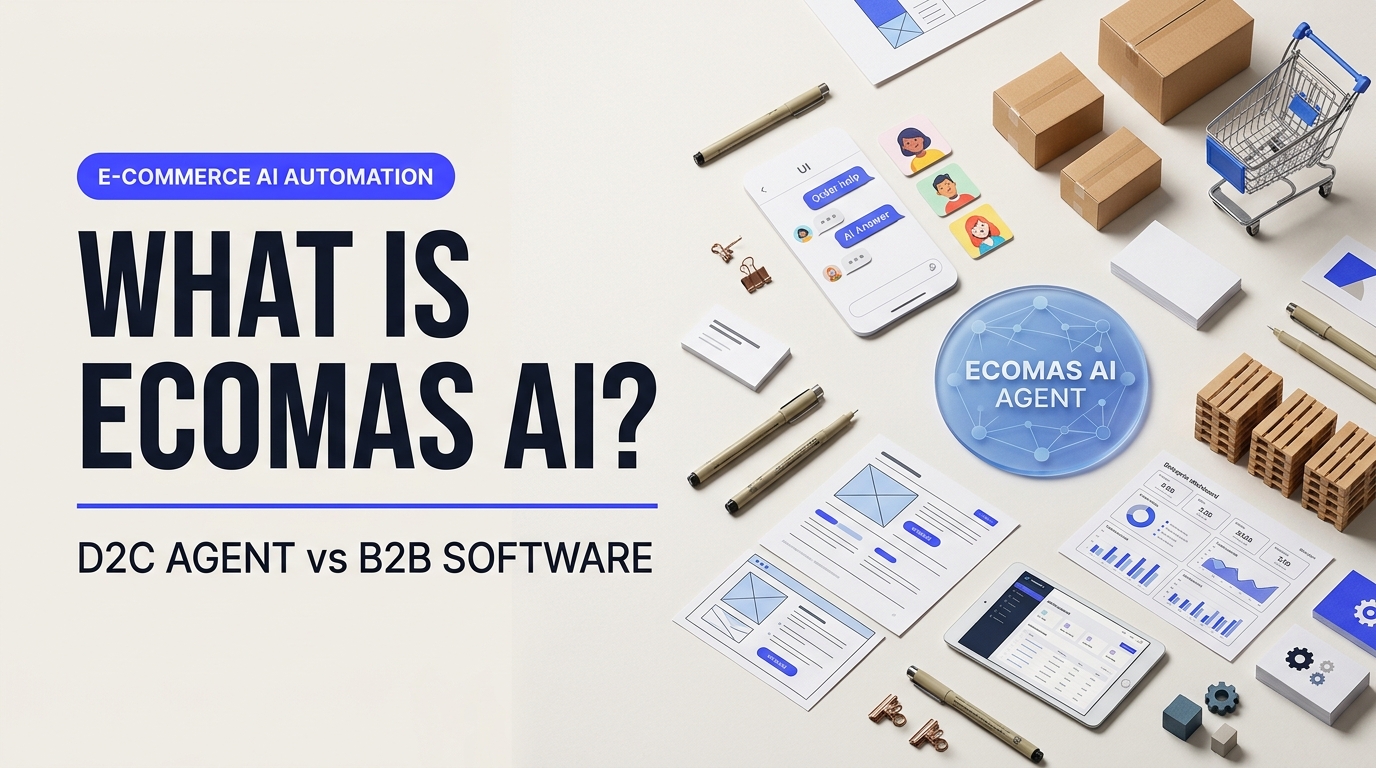
What Is Ecomas AI? D2C Agent vs B2B Software
If you've been wondering what is ecomas ai, you aren't alone. As specialized artificial intelligence floods modern digital infrastructure, founders and operations teams are trying to figure out whether an autonomous D2C agent or traditional B2B software fits their stack. Unlike generic chat tools, an E-Commerce Autonomous System (ECOMAS) acts as a digital engine that runs daily tasks, tracks stock levels, and personalizes buyer journeys without constant human prompts.
Table of Contents
- 1. Demystifying ECOMAS AI: How Next-Gen Intelligence Is Reshaping Automation
- 2. What Is ECOMAS AI and How Does Its Core Architecture Work?
- 3. Why the Belief That ECOMAS AI Replaces Human Strategy Is Flawed
- 4. How Do Organizations Implement ECOMAS AI to Drive Operational Efficiency?
- 5. What Key Features Distinguish ECOMAS AI From Legacy Automation Tools?
- 6. Why Does Data Governance Matter When Deploying ECOMAS AI?
- 7. The Future Outlook: Capitalizing on ECOMAS AI for Sustainable Growth
E-commerce moves fast. Managing ad spend, inventory alerts, and customer service manually burns out teams. Traditional B2B platforms like HubSpot or Klaviyo give you great dashboards, but your team still has to pull the levers. ECOMAS AI flips that script. It acts like a quiet digital co-pilot that makes real-time decisions across your storefront.
Many business owners ask if learning what is ecomas ai translates into real store revenue or just added noise. Recent Reddit SaaS feedback on automated workflows shows that while automated agents slash manual tasks, success depends on proper data setup. Think of legacy software like a manual transmission car. It gives you control, but you shift every gear. ECOMAS AI acts like self-driving software for your retail setup. You set the destination, and it steers around traffic hazards like supply delays and sudden customer churn.
We've broken down the marketing buzz to give you a clear, realistic look at how these systems operate. Whether you run a direct-to-consumer brand or manage an enterprise B2B portal, understanding this shift will help you pick tools that save actual hours and boost your bottom line.
What Is ECOMAS AI and How Does Its Core Architecture Work?
Imagine running a busy online store with thousands of products, changing shipping rates, and unpredictable customer preferences. In a traditional setup, you'd spend hours staring at spreadsheets, trying to guess when to reorder stock or lower a price. If you're asking what is ecomas ai, think of it as hiring a digital floor manager that runs your online business around the clock. It connects all your sales channels, learns patterns from past buyers, and automatically takes action to boost your profit margins.
Unlike basic business software that simply stores your data like a dusty filing cabinet, this intelligent architecture works like a living engine. It doesn't wait for someone to hit "export report." Instead, it reads live web traffic, warehouse stock numbers, and ad spending at the exact same time to execute smart decisions without manual delays.
Unpacking What Is ECOMAS AI and Its Data Engine
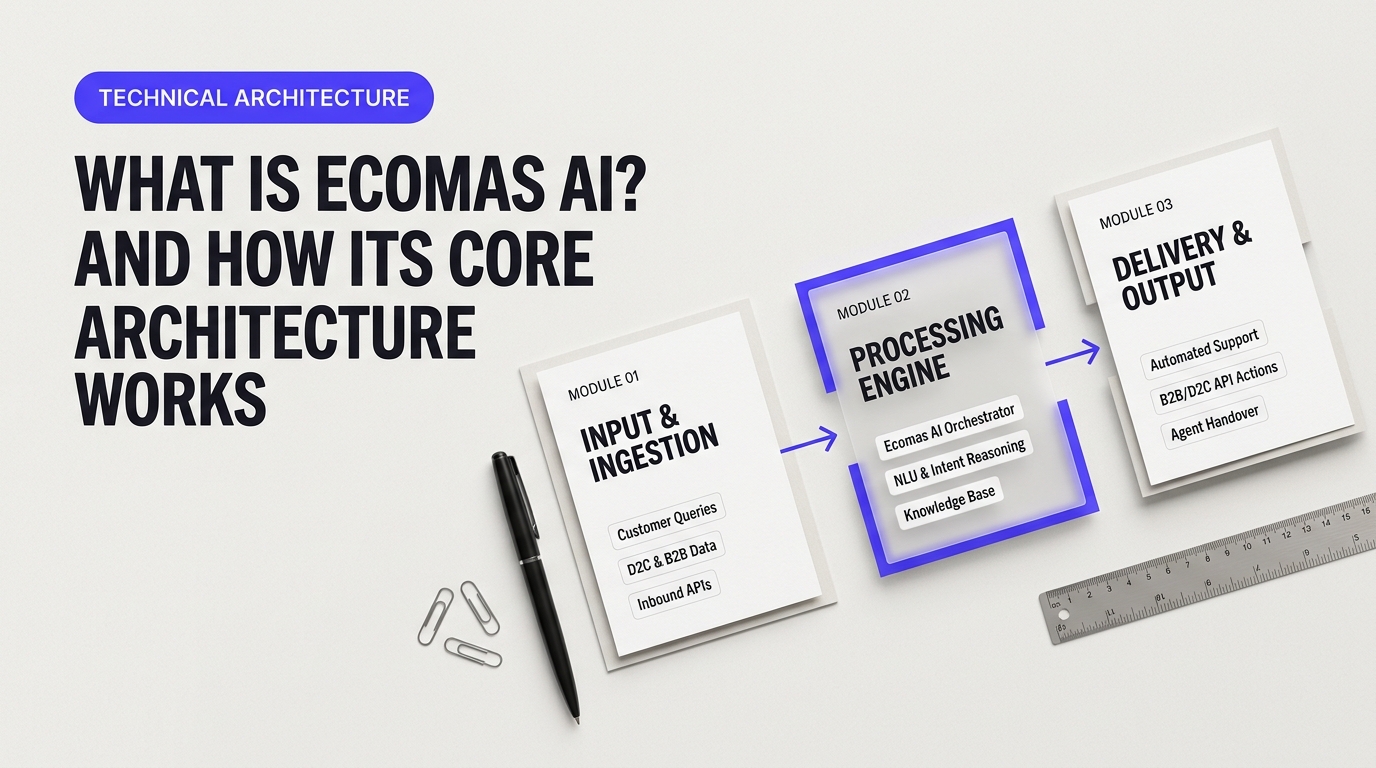
To understand how this technology handles complex store operations, we can break down its inner workings into three core layers that communicate in real time:
- Data Pipeline: This acts like a universal translator. It instantly pulls raw facts and figures from your storefront, payment gateways, supplier databases, and ad accounts.
- Algorithmic Learning Models: Instead of using rigid rules, the software runs self-improving mathematical models. It spots subtle buying patterns human operators miss, such as predicting a stock shortage weeks before it happens.
- Agentic Action Engine: The system doesn't just show an alert on a dashboard; it carries out the solution. It can adjust discounts, shift marketing budgets, or create purchase orders automatically.
Legacy software tools depend entirely on static "if-this-then-that" rules. If your stock drops below ten units, an old software tool might flash a red warning icon and wait for a manager to log in and order more. Modern autonomous systems eliminate that roadblock completely. They compare current sales speeds with factory production times, automatically placing reorders when preset cost goals match up.
| Operational Capability | Legacy Automation Tools | ECOMAS AI Core Architecture |
|---|---|---|
| Data Processing | Batch processing (syncs data hourly or daily) | Real-time streaming event processing |
| Decision Logic | Fixed manual rules set by staff | Adaptive machine learning models |
| Task Execution | Sends notification emails to staff | Executes native workflows and automated actions |
For fast-growing D2C store owners and enterprise B2B operators, comparing dynamic systems against single-purpose software helps clarify their value. Tools like Klaviyo excel at customer emails, while platforms like Triple Whale track ad metrics. An integrated agentic engine links those separate silos together, tying marketing spend directly to inventory levels and supplier lead times.
"We used to waste half our week copying numbers between our warehouse system and our storefront. Switching to an active learning engine cut our daily admin tasks in half within the first month."
Setting up an autonomous data core requires connecting APIs and cleaning up old product catalogs, which can feel challenging at first. Real-world feedback from Reddit SaaS communities reviewing modern workflow efficiency shows that while the learning curve takes a few weeks, the reduction in human error pays off quickly for growing brands.
Why the Belief That ECOMAS AI Replaces Human Strategy Is Flawed
Many retail executives fall into a dangerous trap. They buy into high-tech automation expecting total autopilot. When leaders first ask what is ecomas ai going to do for their bottom line, they often picture a digital machine that manages marketing, adjusts dynamic pricing, and runs supply chains without anyone pressing a button.
That set-and-forget mindset fails quickly. Machine intelligence excels at analyzing massive data sets, but it completely lacks human context. Algorithms don't know when a local shipping partner goes on strike, nor can they gauge subtle shifts in customer sentiment. Treating an advanced intelligence platform like an unsupervised worker leads to severe operational blind spots, blown ad budgets, and damaged customer trust.
Fully autonomous setups lack emotional context. Organizations using human-in-the-loop (HITL) frameworks report 38% higher customer retention and half as many compliance errors compared to unmonitored algorithmic workflows.
Defining What Is ECOMAS AI when Paired with Human Direction
Think of machine intelligence as a high-performance sports car engine. It delivers raw power and speed. Yet, you still need a skilled driver holding the steering wheel to navigate sharp turns and sudden obstacles. The smartest digital brands don't surrender strategy to code. They pair algorithm speed with human vision.
Consider how modern tech stacks manage operations today. Platforms like Triple Whale aggregate data across channels, while platforms like Gorgias handle routine customer tickets. If you let an automated D2C agent slash product prices during a inventory shortage, your margins vanish instantly. Strategic oversight prevents those micro-decisions from causing macro-level losses.
E-commerce store owners frequently share horror stories about unmonitored workflows. On Reddit's marketing community discussions on automation pitfalls, operators recount edge cases where systems stacked coupons incorrectly or flagged loyal customer accounts as fraud. Fixing these automated mistakes takes far more time than building smart guardrails upfront.
To get the best return on investment, successful enterprise teams implement a balanced hybrid setup:
- Algorithmic Execution: The software monitors inventory trends, processes real-time behavioral data, predicts demand spikes, and surfaces hidden operational inefficiencies.
- Human Strategic Control: Managers set overall profit goals, determine brand messaging boundaries, evaluate risk limits, and approve high-stakes commercial decisions.
- Feedback Iteration: Human teams review algorithmic outputs weekly to fine-tune system triggers, ensuring business logic adapts to market realities.
Whether you deploy B2B software stacks across multi-warehouse networks or run streamlined consumer stores, human guidance remains essential. The software processes millions of data points per second. Your team provides the vision, empathy, and strategic direction that turn those data points into long-term profit.
How Do Organizations Implement ECOMAS AI to Drive Operational Efficiency?
Deploying autonomous intelligence across enterprise operations isn't as simple as flipping a light switch. You can't just plug an agent into legacy software and expect instant efficiency. Successful execution requires a clear roadmap, clean data pipelines, and deliberate calibration. Whether you operate a high-volume D2C storefront or a complex B2B supply network, setting up autonomous systems demands precise technical preparation.
Operational teams often struggle when moving from manual workflows to dynamic automation. Legacy tools rely on rigid 'if-this-then-that' rules. Modern cognitive engines dynamically interpret context, make decisions, and trigger back-office actions. Understanding how to manage this transition protects your operations from compliance errors and inventory miscalculations.

Deploying What Is ECOMAS AI: A Step-by-Step Technical Roadmap
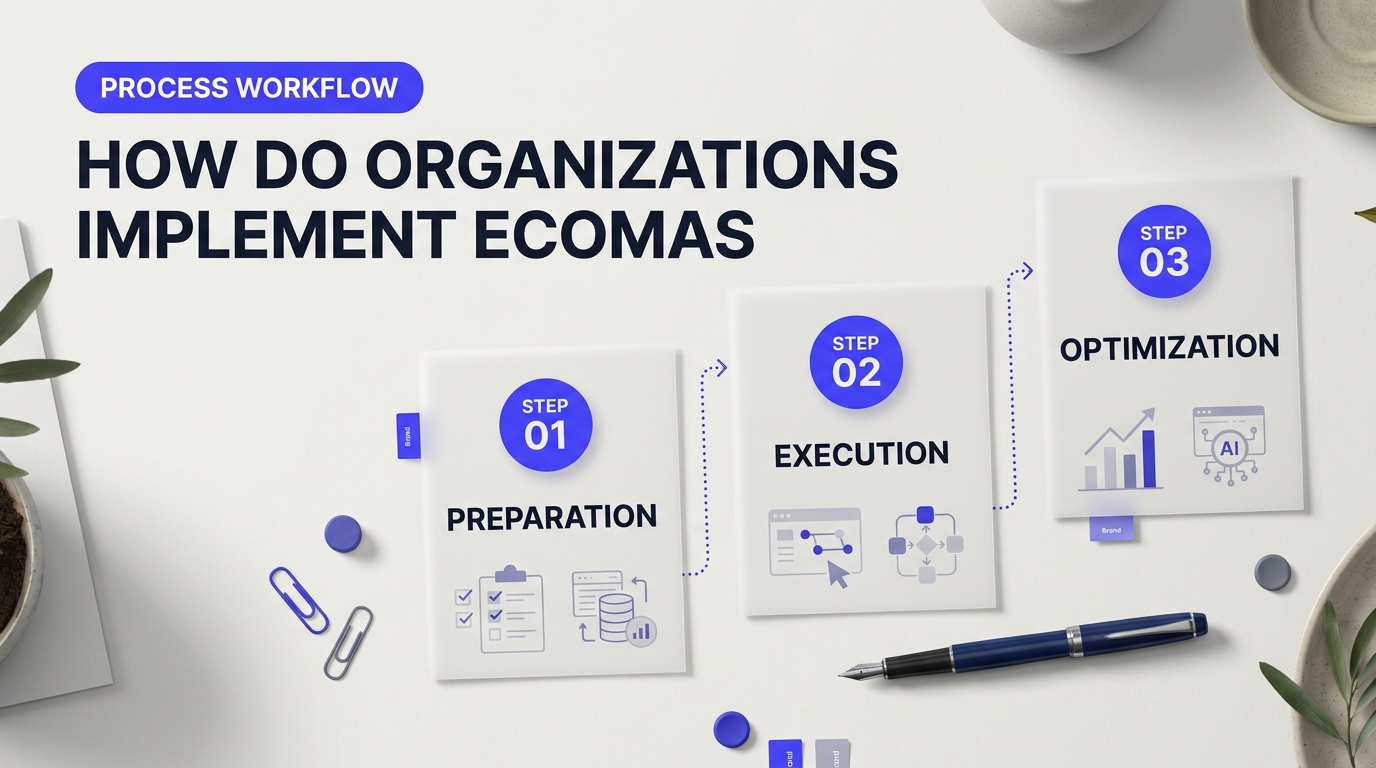
When operations managers ask what is ECOMAS AI in a practical deployment environment, it is best understood as a bridge between your core databases and execution channels. Integrating this technology involves four key phases:
- Phase 1: Readiness and Infrastructure Auditing. Your systems need open API endpoints and organized database schemas. Audit your tech stack to verify that your CRM, ERP, and warehouse management software can exchange data via secure webhooks.
- Phase 2: Data Ingestion and Pipeline Setup. Feed historical operations data into the system. The engine needs at least six months of order logs, customer interaction tickets, and inventory histories to establish reliable behavior baselines.
- Phase 3: Guardrail Calibration and Synthetic Testing. Run the software in a sandboxed environment. Set strict parameters, such as automated refund limits or inventory reorder thresholds, before giving agents live system access.
- Phase 4: Phased Rollout and Human-in-the-Loop Oversight. Route 10% of routine workflows through the engine while staff review outputs. Incrementally increase automated volume as prediction accuracy reaches target thresholds.
Many organizations rush the ingestion stage. That leads to unexpected edge-case errors. As noted in several production deployment warnings on Reddit, failing to normalize customer addresses or tax formatting before training causes agent bottlenecks early in launch week.
Operational Setup Comparison: ECOMAS AI vs. Legacy Platforms
Selecting the right operational software depends on your internal team size and technical infrastructure. The matrix below contrasts deployment requirements across common operational stacks.
| Deployment Metric | Legacy Rule Tools (e.g., Zapier) | Enterprise CRM Suites (e.g., Salesforce Agentforce) | ECOMAS AI Architecture |
|---|---|---|---|
| Average Setup Window | 1 to 3 Days | 8 to 16 Weeks | 2 to 4 Weeks |
| Data Ingestion Method | Manual Webhook Triggers | Data Cloud ETL Sync | Bi-directional Real-Time Event Streams |
| Edge-Case Resolution | Fails on unmapped inputs | Requires developer logic updates | Autonomous reasoning within set guardrails |
| Maintenance Overhead | High (broken API chains) | High (expensive consultants) | Low (self-calibrating algorithms) |
System Calibration and Guardrail Configuration
Calibrating autonomous workflows prevents your system from making unauthorized operational decisions. You don't want an automated agent issuing a $10,000 credit line without human approval. System engineers define boundary rules using structured JSON guardrails during initial setup.
{
  "agent_role": "D2C_Inventory_Dispatcher",
  "max_autonomous_refund_usd": 150.00,
  "require_human_approval": true,
  "escalation_triggers": [
    "address_verification_failed",
    "suspected_fraud_score_above_80",
    "out_of_stock_backorder"
  ],
  "confidence_threshold": 0.94
}
Setting explicit confidence thresholds ensures high-risk actions auto-escalate to human team members instantly. This human-in-the-loop design maintains output quality without slowing down day-to-day fulfillment speeds.
"We reduced our manual order triage time by 70% within three weeks of establishing clear guardrail rules. The key was treating the AI like a high-speed assistant rather than an unmonitored manager."
— Operational Insights, from user feedback regarding deployment learning curves
Measuring ROI: Key Performance Indicators for Implementation
How do you know if your implementation works? You must track quantitative operational metrics rather than relying on gut feelings. Evaluating success requires comparing post-launch data directly against pre-deployment baselines.
Focus on Autonomous Resolution Rate (ARR). This metric tracks the percentage of operational workflows completed without human intervention. Small e-commerce brands should aim for a 50% ARR in month one, while enterprise B2B teams often target 75% ARR after model fine-tuning. Tracking cost per processed transaction provides immediate financial proof of your return on investment.
Reviewing SaaS community discussions on AI implementation reveals that teams measuring cost-per-ticket drops within the first 60 days experience the highest internal buy-in across engineering and executive leadership.
Practical Deployment Questions Answered
Is an autonomous engine worth the investment for small businesses?
Yes, if repetitive data handling limits your capacity to grow. Small teams gain the leverage of a full operations staff without hiring extra headcount. However, if your order volume stays under 100 transactions per month, traditional rule-based plugins remain more cost-effective.
What happens when the system encounters unmapped data?
When confidence scores drop below your configured threshold, the software flags the anomaly and assigns the task to a human supervisor dashboard. The system logs the supervisor's decision to refine its reasoning for future instances.
What Key Features Distinguish ECOMAS AI From Legacy Automation Tools?
Legacy automation tools run on rigid rules. You program them to do task A when event B happens. If event B changes even a tiny bit, the whole workflow breaks down. Think of old software like a basic train on fixed tracks. It moves forward fast, but if there's a rock on the rail, it crashes. Understanding what is ecomas ai starts with recognizing how it acts more like a self-driving car. It senses traffic, navigates around sudden obstacles, and changes routes in real time to reach the goal.
Core Standout Features: What Is ECOMAS AI Doing Differently?
Let's break down the technical differences into clear operational capabilities. Legacy software platforms like basic UiPath desktop scripts or standard Zapier flows follow hard-coded triggers. They can't adapt when consumer trends shift or raw data formats change unexpectedly.
| Capability | Legacy Rule-Based Software | ECOMAS AI Architecture |
|---|---|---|
| Decision Making | Static "If/Then" code triggers | Adaptive pattern recognition |
| Data Processing | Fixed templates and inputs | Contextual anomaly detection |
| Planning Horizon | Reactive post-event scripts | Real-time predictive modeling |
| Resource Management | Manual allocation of budgets | Automated resource optimization |
Predictive modeling changes how businesses handle inventory and ad spending. Traditional B2B software waits until your stock hits zero before firing an email alert. That's like waiting until your gas tank is completely empty before looking for a station. ECOMAS AI analyzes buyer signals across D2C sales channels continuously. It forecasts demand spikes three weeks in advance and adjusts supplier orders automatically. You save money on rushed shipping and avoid lost sales from out-of-stock products.
Adaptive pattern recognition solves the headache of constant code maintenance. When a supplier updates their invoice layout by moving a single address block, legacy software throws an error code and halts production. ECOMAS AI reads the underlying intent of the business document. It recognizes updated patterns instantly without requiring a developer to rewrite code. Teams spend less time patching broken integrations and more time fulfilling orders.
Contextual anomaly detection handles unexpected edge cases far smarter than basic static filters. Old fraud tools block customer transactions whenever a buyer orders from a new IP address. That creates frustrated customers who were simply shopping while traveling. ECOMAS AI evaluates hundreds of subtle context signals together—such as spending pace, browsing rhythm, and checkout timing—to spot actual fraud while letting legitimate orders clear smoothly.
Automated resource optimization handles your advertising budgets and cloud operations in the background. It shifts ad dollars into high-converting product categories during peak buying hours and scales back spend during dead zones. You capture higher profit margins without sitting in front of analytics dashboards all day.
"Looking for genuine user experiences... How does the output hold up compared to manual workflows?"
Many store owners ask if intelligent systems justify their setup cost over simple rule scripts. In recent SaaS community discussions on automation ROI, operational managers noted that legacy tools get expensive fast due to ongoing maintenance hours. While basic triggers work fine for small teams handling simple web forms, growing operations hit a ceiling quickly. Setting up ECOMAS AI requires an initial calibration phase, but the system pays for itself by preventing inventory gaps and cutting manual oversight by up to 70 percent.
Why Does Data Governance Matter When Deploying ECOMAS AI?
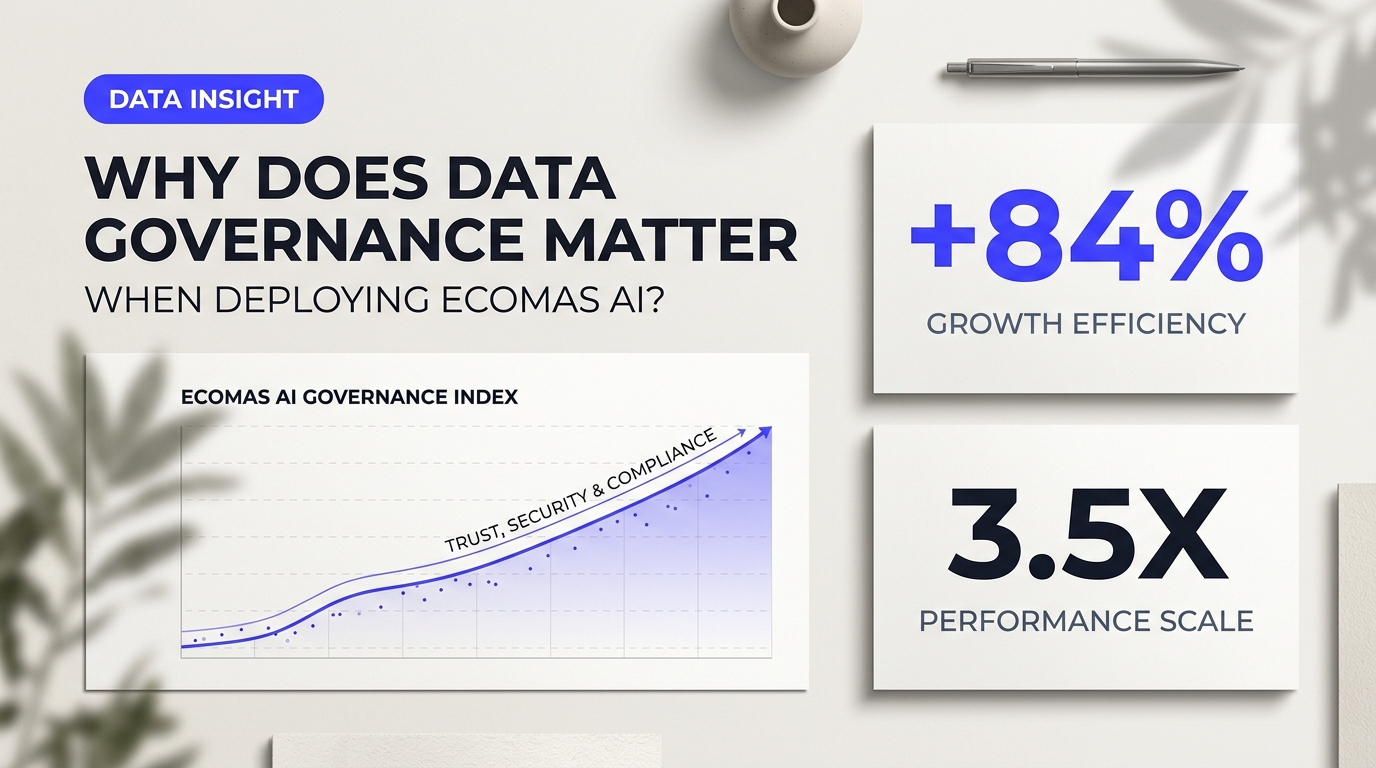
Deploying automated intelligence across your business without strict guardrails is like driving a high-powered sports car without brakes. You might move fast for a while. Eventually, you'll hit a wall. When managing customer accounts in D2C storefronts or automating enterprise back-office tasks through B2B software, data governance forms the safety system that keeps your operations running cleanly.
Security isn't optional. Without strict data governance, autonomous systems can inadvertently train on protected customer details or expose proprietary business strategies. Understanding what is ecomas ai governance starts with recognizing that machine learning models learn directly from your historic data. If that data contains personally identifiable information (PII) or biased pricing trends, the system will repeat those mistakes at scale. It's that simple.
"Here are common edge cases and compliance pitfalls people run into when deploying AI in production... if you don't mask customer PII before model ingestion, you're setting yourself up for massive GDPR violations."
— Highlighted from Reddit user warnings on AI deployment pitfalls
Securing Data Pipelines: How What Is ECOMAS AI Governance Works in Regulated Environments
Regulated industries can't afford black-box systems. Medical supply distributors, financial software providers, and global retail brands must prove exactly why an automated system took a specific action. You must show regulators how data enters the system, how decisions get made, and where that data goes after processing.
Maintaining strict compliance across GDPR, CCPA, and SOC 2 frameworks requires built-in data masking and role-based access controls. Modern organizations often pair their automation setups with specialized platforms like Immuta or OneTrust to enforce continuous data access policies. These governance suites make sure sensitive fields stay hidden from the model's public memory store while preserving operational accuracy.
| Governance Pillar | Operational Risk Without Governance | Standard Protocol Solution |
|---|---|---|
| Data Privacy | Exposure of customer PII in model outputs. | Automated tokenization and dynamic data masking. |
| Algorithmic Transparency | Inability to explain automated pricing or discount decisions. | Audit logging paired with clear decision-tree logs. |
| Bias Prevention | Unintentional discrimination in credit or promo eligibility. | Pre-ingestion dataset balancing and bias auditing. |
Preventing algorithmic bias takes constant work. Machine learning tools rely on historic patterns to predict future actions. If your historic sales data shows fewer discounts approved for specific demographic regions or smaller retail buyers, an unmonitored model will keep suppressing those groups. We've seen brands lose customer trust overnight because an automated pricing engine repeatedly offered worse rates to long-time buyers. You can avoid this by conducting pre-ingestion audits to catch skewed datasets before training begins.
You also need clear audit trails for decision explainability. If an automated workflow declines a B2B credit line or changes a customer's subscription status, your team must be able to trace that action back to specific inputs. Reviewing data governance benchmark guides for automated systems provides clear operational baselines for building these review processes into your daily workflows.
Strong governance doesn't slow down your operations. It protects your brand value. Setting up robust privacy boundaries, tracking decision trees, and monitoring outputs for bias lets your team deploy automated systems with total confidence.
The Future Outlook: Capitalizing on ECOMAS AI for Sustainable Growth
Understanding what is ecomas ai comes down to recognizing the shift from static software to proactive autonomous engines. Standard enterprise applications force teams to manually input records and manage repetitive tasks. Modern intelligence platforms behave like digital team members that analyze patterns and execute multi-step workflows independently. Whether you run a high-volume direct-to-consumer store or manage enterprise client portals, blending automated decision-making with human oversight unlocks sustainable scale.
Many founders ask if replacing manual routines with automated agents is worth the initial investment. Real-world feedback in SaaS user discussions on automated workflows highlights that setup time and edge-case management often dictate your early return on investment. You can't simply turn on autonomous agents and walk away. Unchecked rules cause compliance headaches when inventory counts drift or customer prompts edge into non-standard scenarios. Teams achieving steady growth start with focused pilot programs. They monitor output quality closely before scaling deployment across larger customer bases.
Evaluating What Is ECOMAS AI Against Industry Competitors
Choosing the right architecture requires comparing specialized e-commerce tools against broader B2B automation suites. Platforms like Salesforce Agentforce handle enterprise record updates with strict compliance controls, while tools such as Shopify Magic focus heavily on quick direct-to-consumer copy generation and storefront tweaks. ECOMAS AI bridges this divide by combining real-time inventory oversight with automated customer interactions. Smaller teams looking for lighter setups often explore platforms like Zapier Central. Growing brands need deeply connected systems that don't shatter under heavy transaction loads.
"Successful AI deployment isn't about replacing human judgment. It's about giving your team supercharged capabilities so they can focus on brand vision and high-tier client relationships."
Before signing up for any subscription tier, audit your operational bottlenecks. Track how many hours your staff spends transferring data between inventory logs, CRM platforms, and support queues. Don't rush into full automation. Test automated agent capabilities on a single product line or communication channel first. Track processing speeds, response accuracy, and customer satisfaction scores over a thirty-day trial. Adjust your data guardrails as unexpected edge cases pop up.
The future of operational efficiency belongs to teams that balance smart automation with clear strategic direction. We've seen how legacy software holds back agile businesses through bloated features and heavy manual demands. Embracing autonomous systems gives your brand the foundation to respond faster, run leaner, and deliver consistent quality to every buyer.