5 Myths About AI Customer Support Agents
Almost everyone has suffered through an infuriating automated phone tree or a clueless pop-up bot that repeatedly replied, "I'm sorry, I didn't understand that." Because of those lingering scars, persistent myths about ai customer support agents continue to dominate boardrooms and consumer forums alike. People assume modern bots are just glorified decision trees designed to deflect tickets rather than solve problems. That skepticism makes sense, but it also mistakes yesterday's clunky software for today's dynamic intelligence.
Table of Contents
- Beyond the Scripted Bot: The Changing Reality of Automated Customer Service
- Why the Common Myths About AI Customer Support Agents Don't Match Reality
- Will Bots Eliminate Human Support Jobs? Deconstructing the Replacement Fallacy
- Why Do People Believe AI Cannot Understand Emotion or Nuance?
- How Reliable Is Autonomous Support? Confronting Hallucinations and Security Fears
- Do Customers Always Prefer Waiting for a Human Representative?
- Is Advanced AI Support Out of Reach for Small and Mid-Sized Businesses?
- The Collaborative Future: Moving Toward High-Value, Human-Centered Automation
We've all been there. You type a straightforward question into a chat widget, only to get an unhelpful response linking to an irrelevant help desk article. It feels like talking to a brick wall. That shared frustration shaped how millions view automation today.
Early support bots ran on brittle, rule-based scripts. Think of them like toy trains locked onto rigid tracks. If a customer phrased a problem using an unexpected synonym or stepped one inch off the designated path, the entire interaction derailed. The core business goal back then wasn't satisfaction; it was deflection. Companies used automation like a shield to keep customers from reaching expensive human representatives.
Modern generative AI turns that old approach completely upside down. Today's systems focus on rapid resolution rather than stubborn deflection. Instead of matching keywords against static lists, large language models grasp intent, syntax, and business context simultaneously.
Platforms like Intercom's Fin and Zendesk AI highlight this transition. Older platforms required engineers to build out thousands of fragile branching scenarios by hand. In contrast, modern solutions ingest help center articles, API documentation, and past conversation logs to generate accurate, natural answers on the fly. They don't just recite facts, either. Connected to an e-commerce platform like Shopify or a billing system like Stripe, an AI agent can track down an order, initiate a return, or update payment details in seconds.
Despite these massive technological leaps, doubt remains widespread. As seen across discussions on SaaS customer automation, support leaders constantly debate whether automated quality can truly match manual human workflows without introducing operational risks. Separating outdated assumptions from modern capabilities is the only way forward. By unpacking the prevailing myths about ai customer support agents, we can see what automated service looks like when it is designed to help customers rather than push them away.
Why the Common Myths About AI Customer Support Agents Don't Match Reality
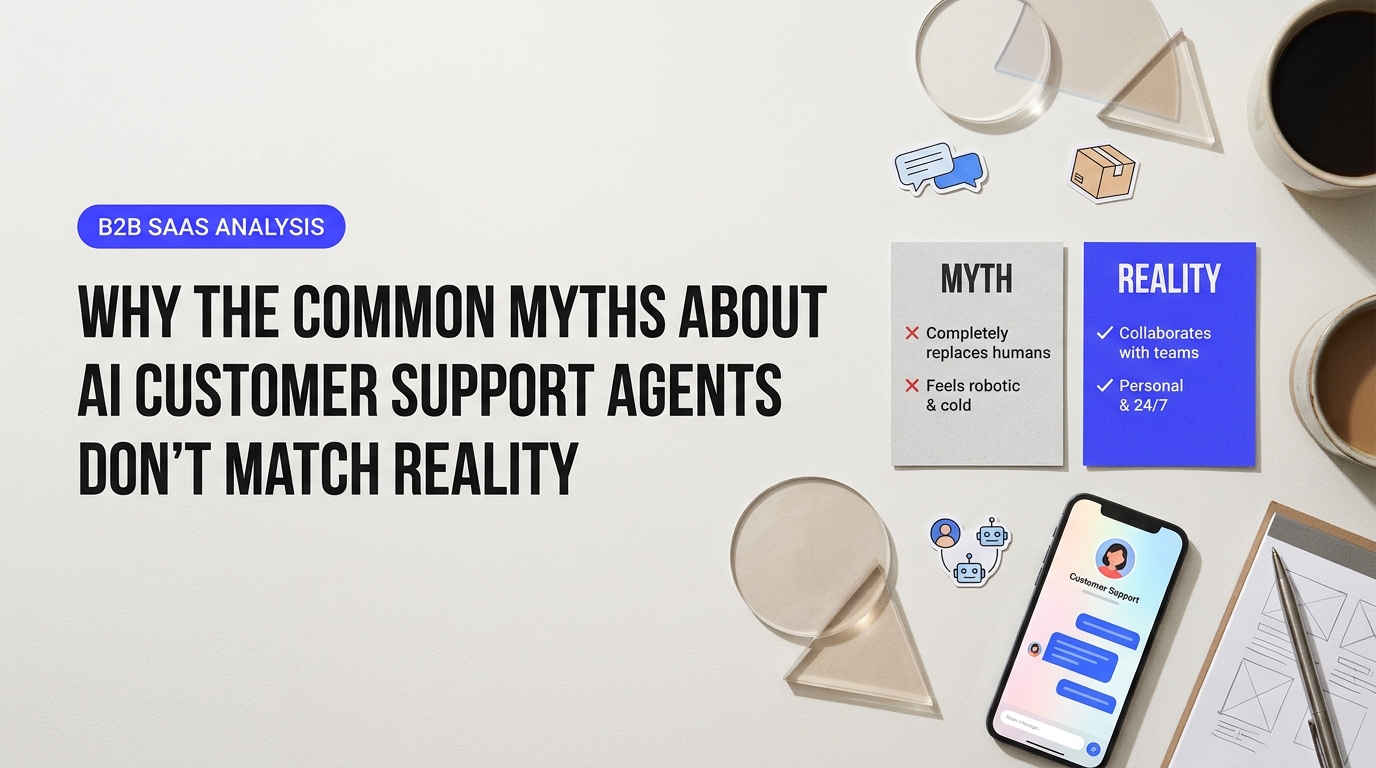
Most persistent myths about ai customer support agents stem from genuine customer frustration. We've all lived through the nightmare of early chatbots. You typed a simple question, misspelled a single word, and received a completely irrelevant FAQ link. Those early systems ran on rigid decision trees and exact keyword matching. If your phrasing didn't match the programmer's pre-built script, the conversation collapsed. The bot felt like an aggressive brick wall standing between you and a real human.
That past experience created a lasting belief: automation only exists to save companies money by deflecting angry callers. Many support teams still believe bots cannot handle real tasks. That skepticism is easy to understand, but the underlying tech has completely changed.
The Tech Shift Disproving Common Myths About AI Customer Support Agents
Old bots worked like a basic "Ctrl+F" search. If a user typed, "My box didn't show up," but the script only recognized the exact string "missing parcel," the system hit a dead end. It couldn't grasp intent because it only understood letters, not meaning.
Modern platforms don't match keywords. They use large language models and vector embeddings. Think of embeddings as a mathematical map of ideas. When a user writes a message, the software maps the underlying concept rather than the individual letters. "The box is nowhere to be found" and "Where is my order?" land on the exact same coordinate on that map. The system understands what you want, even if you speak casually, make spelling mistakes, or leave out product names.
| Capability | Legacy Rule-Based Bots | Modern Generative AI Agents |
|---|---|---|
| Language Interpretation | Rigid if/else scripts that require exact keyword triggers. | Semantic analysis that interprets tone, slang, typos, and phrasing variations. |
| Conversation Memory | Zero memory. Evaluates each message in isolation. | Full context retention across multi-turn dialogs. |
| Primary Goal | Ticket deflection to push users toward static self-help links. | Autonomous issue resolution through live backend tool integrations. |
| System Integration | Basic webhooks or static link delivery. | Direct read/write access to CRM platforms, payment gateways, and databases. |
Founders and customer experience managers frequently debate this transition. In Reddit SaaS discussions on automated support ROI, operators often share worries that conversational agents will misinterpret edge cases or generate robotic gibberish. The difference between failure and success comes down to how modern agents use context.
"Legacy bots told customers where to look. Modern AI agents perform the actual work."
Context changes everything. Consider a customer who says: "Actually, change that to my home address." An older script completely breaks down here. What does "that" mean? What address? Modern AI tools like Intercom's Fin and Zendesk AI maintain conversation history across multiple turns. The agent looks back at the previous exchanges, pinpoints the active order number, and pulls your saved address from Shopify or your custom database. Instead of redirecting you to a help center article, the agent updates the order details directly in your warehouse software.
Comparing today's agents to the scripted tools of five years ago is like comparing an interactive satellite GPS to a paper road atlas. The atlas shows roads, but it can't tell you about a traffic jam ten miles ahead. Generative support agents adjust to unexpected situations, grasp the human intent behind a question, and solve problems without making the customer jump through hoops.
Will Bots Eliminate Human Support Jobs? Deconstructing the Replacement Fallacy
The fear sounds reasonable on paper. A company plugs in an autonomous bot, ticket backlogs vanish, and leadership lays off half the support floor. That narrative dominates headlines and watercooler chats. But watching support teams deploy automation reveals a completely different reality. Mass layoffs rarely follow successful rollouts. Instead, team burnout drops, response times shrink from hours to seconds, and agent retention improves.
Workforce Myths About AI Customer Support Agents in Practice
One of the biggest myths about ai customer support agents is that software and human reps compete for the exact same tasks. They don't. Traditional support queues force skilled professionals to spend most of their shifts answering identical, repetitive questions. Where is my tracking number? How do I reset my password? What is your return window? These Tier-1 inquiries act like digital static. They clog queues and drain the creative energy reps need to handle complex, distressed buyers.
AI handles the repetitive frontline grunt work. Think of an AI agent as a hospital triage desk rather than a replacement doctor. The triage desk checks temperatures, collects insurance cards, and directs minor scratches to a quick-care room. That system leaves the specialist surgeons free to focus on emergency room procedures. In customer service, the bot takes care of routine data lookups, while human specialists tackle angry escalations, account cancellations, and nuanced product bugs.
"Bots handle the math; humans handle the relationship. When you try to make software deliver heartfelt apologies or negotiate contract renewals, customers feel insulted."
Software platforms have evolved specifically around this partnership. Consider how leading industry solutions divide the workload:
- Intercom (Fin): Built for fast-scaling software companies, Fin resolves clear knowledge-base questions directly inside chat queues. It summarizes chat histories instantly when an issue requires human attention, giving the live agent complete context without asking the customer to repeat themselves.
- Gorgias: Tailored for e-commerce brands, Gorgias automatically pulls order tracking, edits shipping addresses, and issues standard refunds in Shopify. This relieves frontline staff so they can run proactive pre-sales chats and VIP loyalty outreach.
Community conversations among support leads reflect this operational shift. In an ongoing thread on Reddit, SaaS founders discussing support workflows pointed out that attempts to swap entire teams for bots almost always fail during unpredictable edge cases. The teams getting the highest return on investment use AI as an assistant, not a replacement workforce.
| Work Item | AI Agent Responsibility | Human Rep Responsibility |
|---|---|---|
| Tier-1 Inquiries | Instant self-serve resolution (order tracking, policy questions). | Monitors accuracy and updates training documentation. |
| Complex Troubleshooting | Gathers system logs, error codes, and customer device data. | Diagnoses root causes and guides users through technical fixes. |
| High-Stakes Escalations | Flags negative sentiment and immediately routes the chat. | De-escalates frustration, offers customized concessions, and rebuilds trust. |
Automating simple answers changes what it means to work in support. The job shifts away from typing mechanical copy-paste replies at breakneck speed. It becomes a role focused on problem-solving, relationship management, and product consultation. Human agents stop feeling like cogs in a ticketing machine. They become genuine brand ambassadors backed by a silent digital partner.
Why Do People Believe AI Cannot Understand Emotion or Nuance?
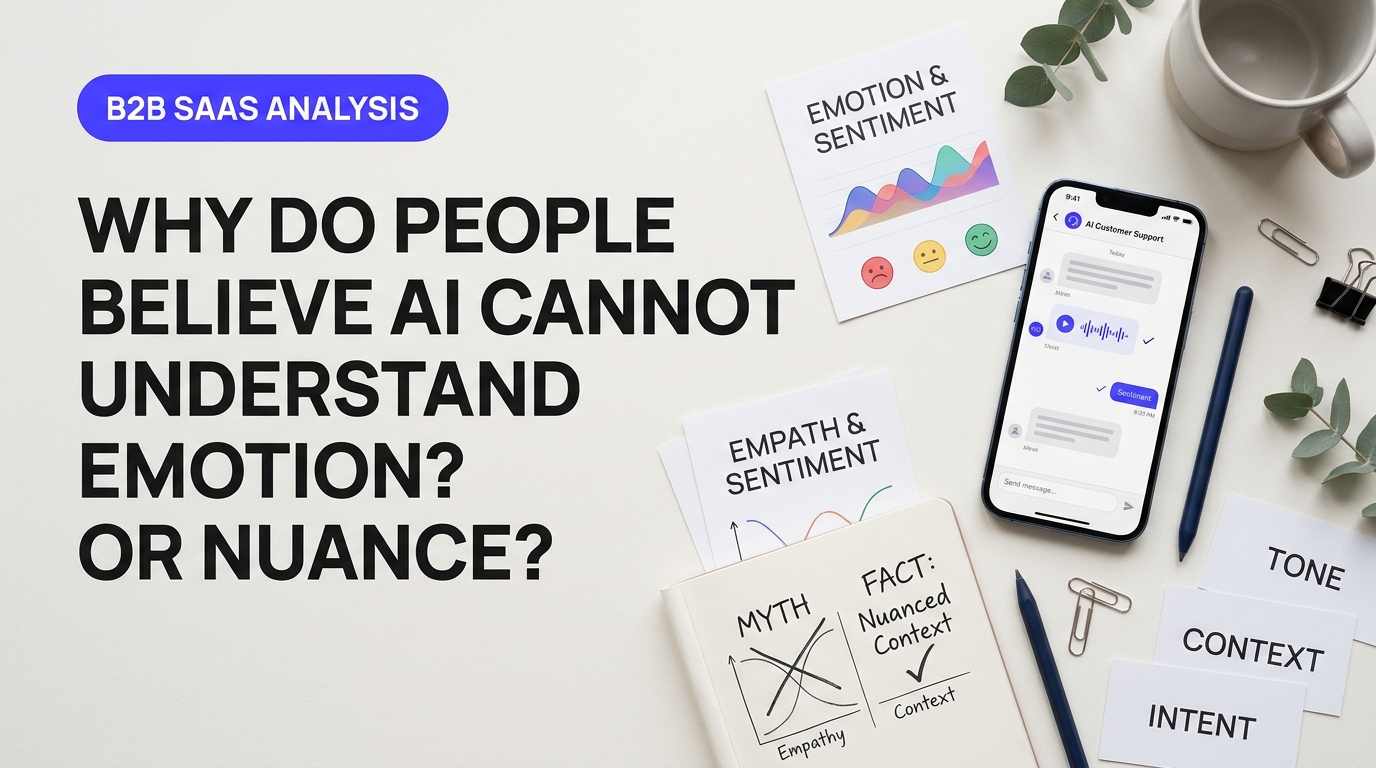
Most shoppers formed their opinions about automated customer service during the dark ages of scripted decision trees. We've all yelled "representative!" into a phone or typed "cancel my subscription" into a live chat widget, only to get an upbeat "I'd love to help you browse our catalog!" in response. It felt like talking to a brick wall with a painted-on smile. That collective frustration created persistent myths about ai customer support agents being emotionally hollow robots doomed to misinterpret everyday human nuance.
Old bots operated on rigid if-then loops. If a customer didn't use an exact keyword, the machine stalled. Today, large language models (LLMs) operate on semantic understanding rather than static keyword matching. They don't just register what words were typed. They parse how those words fit together, the implied urgency, and the underlying frustration.
Busting Myths About AI Customer Support Agents and Emotional Nuance
Real-time sentiment analysis doesn't mean an algorithm experiences human feelings. Think of an AI agent like an observant poker player reading table tells. It constantly monitors sentence length, punctuation choices, capitalization, and vocabulary shifts. A customer typing short, clipped sentences with exclamation points signals an entirely different emotional state than someone asking a casual product question. Modern systems score this emotional valence within milliseconds.
Once the engine detects friction, tonal adaptation kicks in. Instead of replying with cheery canned responses, the AI strips away fake enthusiasm. It shifts to a direct, respectful, and calm voice. If a shopper says, "This package was supposed to arrive yesterday for my daughter's birthday," an untrained system might say, "Thanks for reaching out! Let me check that tracking number!" A tone-aware system responds with direct accountability: "I understand how time-sensitive this delivery was for your daughter's birthday. Let me look into the transit status right now to find out where it is."
"The problem was never automation itself; the problem was cheerful bots ignoring obvious customer distress. Once an automated agent learns when to drop the customer-service smile and take accountability, friction evaporates."
Contextual memory prevents another universal support headache: making customers repeat themselves. Advanced tools remember account history, past tickets, and prior friction points. If an enterprise buyer experienced an outage earlier in the week, the system connects those dots instantly. It tailors the conversation based on the user's relationship with the brand, not just the single sentence in front of it.
| Capability | Legacy Rule-Based Chatbots | Modern Sentiment-Aware AI |
|---|---|---|
| Emotional Detection | Blind to user mood; relies strictly on pre-set trigger words. | Evaluates vocabulary, syntax, and punctuation in real time to calculate sentiment. |
| Voice & Tone | One-size-fits-all, often jarringly cheerful regardless of context. | Dynamically adapts tone from upbeat to apologetic, direct, or concise. |
| Escalation Handling | Traps users in repetitive failure loops ("I didn't understand that"). | Triggers warm handoffs to humans with summarized context before tempers flare. |
Different software platforms handle these nuances with specialized approaches. For tech and SaaS teams, Intercom (Fin) interprets nuanced questions across messy user descriptions, dialing down its tone when customer frustration scores spike. In retail and direct-to-consumer environments, Gorgias relies on e-commerce-specific sentiment models. It recognizes order distress, tracks delivery intent, and prioritizes urgent refund disputes directly into a VIP queue.
What happens when automated systems actually catch frustration early? The performance numbers speak clearly. Benchmark data shows that AI setups utilizing dynamic sentiment routing maintain customer resolution rates between 72% and 80%. When an automated agent recognizes it cannot solve a complex complaint, it executes a warm handoff. It sends the conversation transcript, a bulleted summary of the customer's problem, and an emotional assessment to a live agent. The customer never has to re-explain their problem, and the human specialist steps in with full situational awareness.
This dynamic addresses a common concern raised in Reddit SaaS discussions on customer support automation, where founders worry about whether digital tools damage customer goodwill during edge cases. Automated systems don't need real human empathy to deliver an empathetic experience. They just need the technical awareness to recognize human distress, drop the robotic script, and clear a fast path to resolution.
How Reliable Is Autonomous Support? Confronting Hallucinations and Security Fears
Nobody wants a rogue bot inventing company policy on the fly. When support leaders push back against automated tooling, their hesitation usually traces back to two clear fears: an agent promising a customer a full refund on a non-refundable flight, or exposing sensitive personal information across chat sessions.
Among the biggest myths about ai customer support agents is the idea that they run completely unguided, spouting wild guesses like an unfiltered consumer chatbot. The reality looks much different in enterprise environments. Production AI agents don't rely on random memory. They work inside tightly controlled architectures built specifically to keep answers grounded, auditable, and secure.
Debunking myths about ai customer support agents and hallucination risks
Standard language models guess the next most likely word based on public web data. Enterprise customer support engines do not do this. They rely on an architecture called Retrieval-Augmented Generation, or RAG.
Think of standard generative AI like a student taking a closed-book exam. They have to rely on whatever they memorized weeks ago, and when they can't remember a date, they might guess to sound confident. RAG turns that exam into an open-book test. When a customer asks a question, the platform searches your verified knowledge base, finds the exact relevant paragraph, hands it to the AI, and says, "Answer using only these three sentences. If the answer isn't here, admit that you don't know."
If the information isn't in your help center, the model doesn't guess. It triggers an immediate handoff to your team.
| Operational Metric | Multitasking Human Agent | RAG-Grounded AI Agent |
|---|---|---|
| Source of Truth | Memory, outdated internal notes, or fragmented chat threads | Live indexing of official, approved knowledge base articles |
| Fatigue & Error Rate | Error rates rise sharply during peak shifts and ticket backlogs | Maintains consistent policy checks across thousands of concurrent chats |
| PII Handling | Manual redaction risks; prone to shoulder-surfing or accidental logging | Automated token masking scrubs card numbers and passwords before processing |
Support managers often ask about consistency compared to manual workflows. In Reddit SaaS discussions on autonomous support workflows, teams frequently point out that human reps handle three or four chats at once while scrolling through out-of-date wikis. A tired agent rushing through an 8-hour shift makes honest mistakes. They misquote shipping fees, confuse promotion end dates, or forget that a return window changed last Tuesday.
An autonomous agent never rushes. It checks the live database on every single turn.
Security operates under similar strict boundaries. Modern platforms isolate customer data using zero-data retention agreements with model providers. That means your internal tickets and customer chats aren't fed into public models to train future releases. On top of that, enterprise guardrails apply real-time masking to scrub Social Security numbers, bank accounts, and passwords before any text hits the reasoning engine.
Tools like Intercom Fin and Zendesk AI show how tight these controls have become in practice. Fin runs on custom guardrails that restrict answers exclusively to content you explicitly approve, flagging low-confidence topics for your human staff instead of guessing. Zendesk AI matches incoming requests against verified intent categories, pairing automated resolution with enterprise-grade role-based access controls so customers only see account data tied directly to their verified identity.
"An enterprise AI agent doesn't guess to be polite. It validates the policy, references the exact document URL, and stops speaking the second it hits an unfamiliar topic."
When businesses configure their knowledge sources and set clear confidence thresholds, autonomous agents don't increase risk. They eliminate the guesswork that causes support slip-ups in the first place.
Do Customers Always Prefer Waiting for a Human Representative?
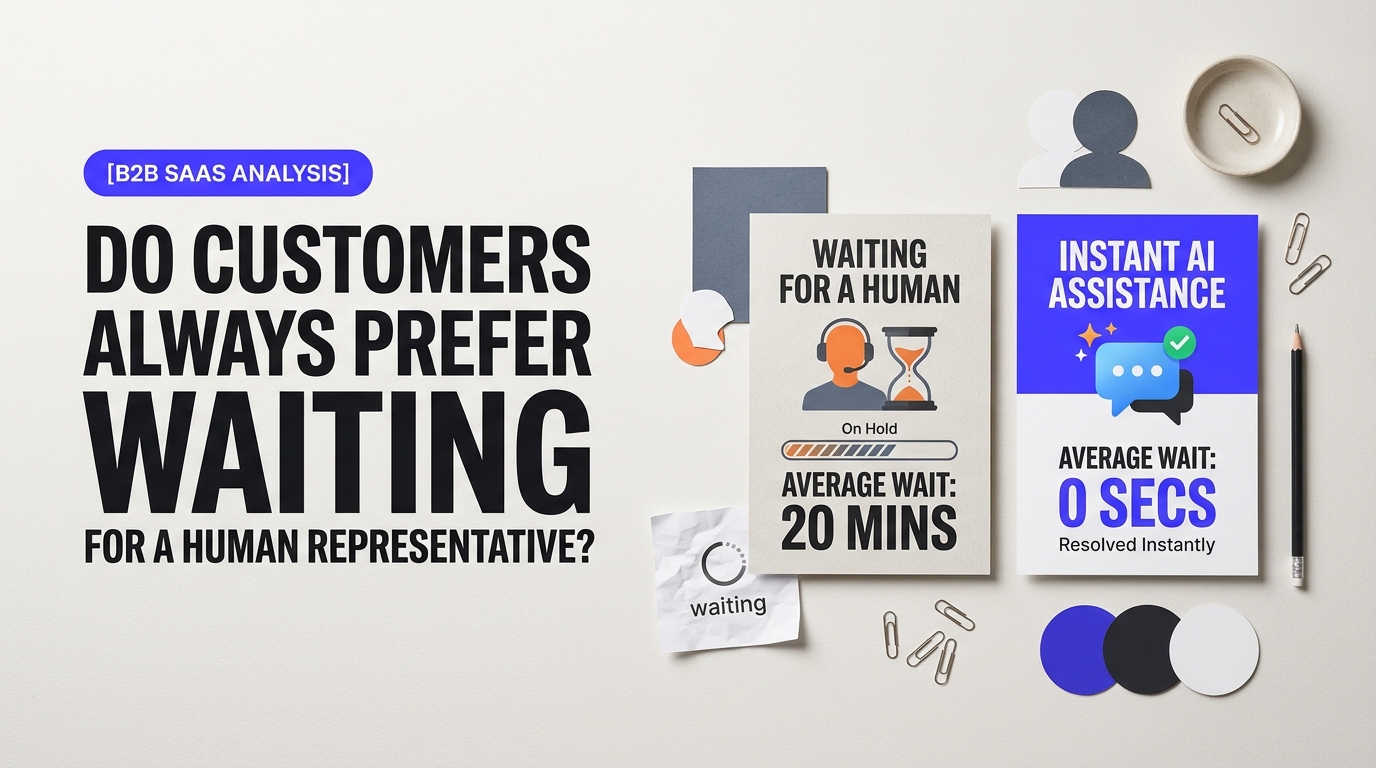
Nobody logs onto a website hoping to sit in a queue. We've all been trapped listening to tinny hold music for forty-five minutes just to check the status of a delayed package or cancel a recurring subscription. That experience leaves people furious. Still, one of the most stubborn myths about ai customer support agents is that people will always choose to wait for a live person, regardless of how long it takes.
Reality looks very different. When someone reaches out to a support desk, they don't want a heart-to-heart conversation. They want a fast, painless fix.
Exposing Myths About AI Customer Support Agents: What Shoppers Actually Value
Modern consumer sentiment tells a clear story. Over 70% of consumers expect immediate help the moment they hit a snag online. If someone has a question at 2:00 AM about an exchange policy or shipping window, they don't want to submit a ticket and pray for a reply by Tuesday morning. They want an answer in five seconds.
The friction comes from forced waiting, not automation itself. Look at how user experience changes when routine transactions shift from manual queues to instant systems:
| Support Metric | Traditional Human-Only Queue | Autonomous AI Resolution |
|---|---|---|
| First Response Time | 15 to 45 minutes (or 24 hours via email) | Under 10 seconds |
| Availability | Limited to local business hours | 24/7/365 coverage across all time zones |
| Simple Query Handling | High wait times, repetitive staff burnout | Direct API lookups with zero hold time |
| Customer Emotion | Resentment built up while on hold | Relief at instant problem resolution |
Store owners and support leads often ask how this shift plays out in practice. In a Reddit discussion on automated support benchmarks, e-commerce managers pointed out that over half their incoming tickets were simple "Where is my order?" requests. Forcing shoppers to wait hours just to get a tracking link drove satisfaction scores into the ground.
Modern platforms tackle this exact issue without creating frustrating dead ends. Tools like Intercom's Fin AI agent and Gorgias show how fast resolution changes customer behavior. Fin pulls answers directly from existing knowledge bases to resolve up to half of incoming inquiries instantly. Gorgias connects straight into e-commerce backends like Shopify, letting the system check shipping statuses, cancel orders, or process straightforward refunds in seconds.
Customers do not crave human interaction for simple logistics; they crave resolution. Waiting twenty minutes for a human to read a tracking number off a screen helps no one.
Human staff remain essential when an issue is messy, confusing, or emotionally charged. If an airline cancels a flight during a family emergency, a customer needs real empathy. But for everyday queries—updating payment details, confirming delivery dates, checking return windows—speed reigns supreme. Smart automation removes everyday hold-queue friction so human reps can focus on high-stakes cases that truly require a personal touch.
Is Advanced AI Support Out of Reach for Small and Mid-Sized Businesses?
Many founders assume intelligent bots belong strictly to Fortune 500 giants. They picture rooms full of machine learning engineers, seven-figure budgets, and years of custom development. That picture is completely out of date. Building artificial intelligence used to resemble erecting your own private power plant. Today, it works like plugging an appliance into a wall outlet.
Debunking Myths About AI Customer Support Agents for Growing Teams
One of the most persistent myths about ai customer support agents is that lean companies lack the resources to run them safely. Small teams often worry about complex setups and runaway costs. As noted in SaaS community discussions on AI support ROI, operators routinely ask whether the output quality can rival manual workflows without draining their runway. The short answer is yes.
Modern platforms strip away the technical grunt work. You do not train language models from scratch. Instead, turnkey software connects directly to your existing help center, return policies, and product documentation using Retrieval-Augmented Generation (RAG). Think of RAG as handing an open-book test to an assistant who can read thousands of pages in milliseconds. The bot answers questions using only your approved documents, which slashes setup time from months to an afternoon.
| Platform | Best For | Pricing Approach | Setup Effort |
|---|---|---|---|
| Intercom (Fin AI) | B2B software, service brands | Pay-per-resolution (around $0.99 per solved issue) | Minutes; ingests public URLs and help articles instantly |
| Gorgias AI | E-commerce stores on Shopify/BigCommerce | Tiered monthly plans based on automated ticket volume | Low; pre-built templates for tracking orders and returns |
How much should a smaller business expect to spend? Most vendors have moved to usage-based or outcome-based models. With tools like Intercom Fin, you pay nothing if the bot fails to resolve the user's issue and hands off the conversation to an agent. For an online store handling 1,500 monthly conversations, resolving 40% of repetitive questions automatically costs roughly $600. Hiring another full-time agent easily costs five times that amount before benefits and onboarding.
Choosing between tools comes down to your primary ticket types. Follow these practical steps to evaluate your options without overspending:
- Audit your top questions: Export your last 200 customer tickets into a spreadsheet. If 50% or more ask "Where is my order?" or "How do I reset my password?", a templated e-commerce tool like Gorgias will yield immediate returns.
- Check native integrations: Never pay for custom middleware. Pick an automated agent that hooks directly into your current CRM, help desk, and inventory software with one click.
- Test the guardrails: Feed the AI ambiguous or tricky customer questions during free trial periods. A solid platform will gracefully say, "I'm not sure, let me connect you to a teammate," instead of making up an answer.
- Start with a narrow scope: Turn the agent on for one channel first, like live web chat during off-hours. Watch its resolution accuracy for two weeks before letting it handle email queues or social media messages.
Advanced support automation is no longer a luxury reserved for tech giants with deep pockets. With modern no-code interfaces and pay-as-you-go pricing, small teams can provide fast, 24/7 assistance without hiring a single software engineer.
The Collaborative Future: Moving Toward High-Value, Human-Centered Automation
Most lingering myths about ai customer support agents come from an outdated binary. Leaders often assume they must pick between robotic deflection and expensive human teams. That choice is obsolete. Modern support platforms don't attempt to clone human empathy or replace nuanced judgment. They absorb repetitive data retrieval, status checks, and basic troubleshooting so human specialists can handle high-stakes customer retention. Thinking of automation as a collaborative teammate rather than an imperfect human substitute changes how you build your entire customer experience.
Real-world testing highlights this shift. In online communities, SaaS operators sharing deployment benchmarks frequently point out that the biggest hurdle isn't the AI model itself. The real friction stems from messy internal documentation, poor API connections, and broken escalation paths. If your knowledge base is disorganized, your automation will falter. Conversely, when tools are grounded in clean, structured product data, accuracy rates climb quickly.
Moving Past Myths About AI Customer Support Agents: Practical Evaluation Criteria
Choosing the right automated workflow means looking beyond flashy marketing demos. You need reliable tools that handle edge cases cleanly without leaving your users trapped in dead ends. Compare how modern platforms handle workload distribution:
Specialized platforms approach this differently based on business model. For software and product support, platforms like Intercom (powered by its Fin engine) stand out by indexing complex help centers and resolving inquiries directly from documentation. For direct-to-consumer and retail brands, tools like Gorgias excel by plugging straight into Shopify, pulling live tracking updates, processing refunds, and editing orders without human intervention. Both tools show that modern value comes from deep integrations, not generic conversational flair.
When selecting your platform, judge systems against four practical baselines:
- Grounded knowledge retrieval: The agent must pull answers strictly from verified sources, citing its references and declining to answer when source materials lack clarity.
- Frictionless handoffs: When an issue requires human review, the AI must pass a complete interaction summary to the agent, eliminating the need for customers to repeat themselves.
- Predictable unit economics: Avoid murky consumption pricing. Prioritize providers that bill per successful resolution rather than per message sent or token consumed.
- Real-time action execution: The software shouldn't just talk. It must safely trigger back-end actions, like canceling a subscription, reissuing an invoice, or routing high-value accounts to dedicated account managers.
"Automation works best when it removes cognitive clutter. Let algorithms manage repetitive data entry so your people can manage relationships."
Treating automation as a shield to block customers creates bad brand experiences. Using it as a filter that routes, enriches, and resolves baseline requests creates speed and trust. The brands winning today don't hide their staff behind algorithms. They use machine speed to let their human experts show up right when it counts.