How to Build an AI Post-Purchase Engine - build an ai post purchase retention engine
Acquiring a new customer today costs nearly triple what it did five years ago. If your online store pours every dollar into paid search and social ads while ignoring the checkout confirmation screen, your margins are bleeding out. That is why high-growth brands now build an ai post purchase retention engine to protect profit margins and turn single-order shoppers into lifelong buyers. When you automate what happens between the buy button and unboxing, you stop gambling your ad budget on one-off conversions.
Table of Contents
- Why Post-Purchase Experience Is the New Driver of E-Commerce Profitability
- Core System Architecture: Building an AI Retention Engine
- Automated Support: Eliminating Buyer Remorse and WISMO
- Dynamic Creative Asset Generation for Post-Purchase Nurturing
- Predictive Replenishment Models and Trigger Windows
- Sentiment Analysis in Support Interactions to Drive Upsells
- Key Metrics to Quantify AI Retention Impact
- Transforming First-Time Buyers into Long-Term Brand Advocates
Ad costs keep climbing. Most direct-to-consumer stores break even on the first sale only after factoring in fulfillment, packaging, and payment fees. True profitability lives in the second, third, and fourth orders. Yet, the typical post-order journey feels like a ghost town. A shopper pays, gets a sterile confirmation email, and hears radio silence until the package arrives. In a candid thread with Reddit e-commerce operators discussing acquisition versus retention, store founders noted that repeat buyers are vastly more profitable than cold leads, yet brands regularly abandon them after checkout with zero follow-up or education.
This post-order silence breeds buyer remorse. Customers wonder if they picked the right size, whether their package shipped, or if their delivery got lost in transit. These worries spawn waves of "Where is my order?" (WISMO) tickets that overwhelm support desks and drain operational resources. Findings outlined in Salesforce research on post-purchase customer journeys show that post-sale communication quality directly dictates whether a consumer ever buys from that merchant again. When you send people to a plain carrier tracking portal, you throw away high-intent traffic that should stay on your own branded domain.
Smart operators solve this friction by running systems that communicate contextually. Instead of blasting unread generic newsletters, an automated retention system tracks carrier webhooks, catches transit delays before the customer notices, and answers routine product care questions through machine learning agents. When you decide to build an ai post purchase retention engine, your software takes over onboarding, setup tips, and predictive restocking reminders without manual effort.
The video above outlines how modern Shopify brands connect operational tracking apps with conversational customer platforms to create a cohesive post-checkout stack. Pairing proactive order tracking tools like Wonderment with automated help desks like Gorgias lets you resolve friction before it turns into a refund request. Instead of waiting for angry emails, your system feeds delivery updates and personalized recommendations right when excitement is highest. That predictability shields your margins, boosts customer lifetime value, and frees your store from relying entirely on paid ad channels.
How to Build an AI Post Purchase Retention Engine: Core System Architecture
Most engineering and marketing teams start in reverse. They plug a large language model into their email tool, draft generic prompts, and wonder why repeat sales stay flat. If you want to build an ai post purchase retention engine that actually prints profit, you must treat it like an operational operating system rather than a marketing copy generator.
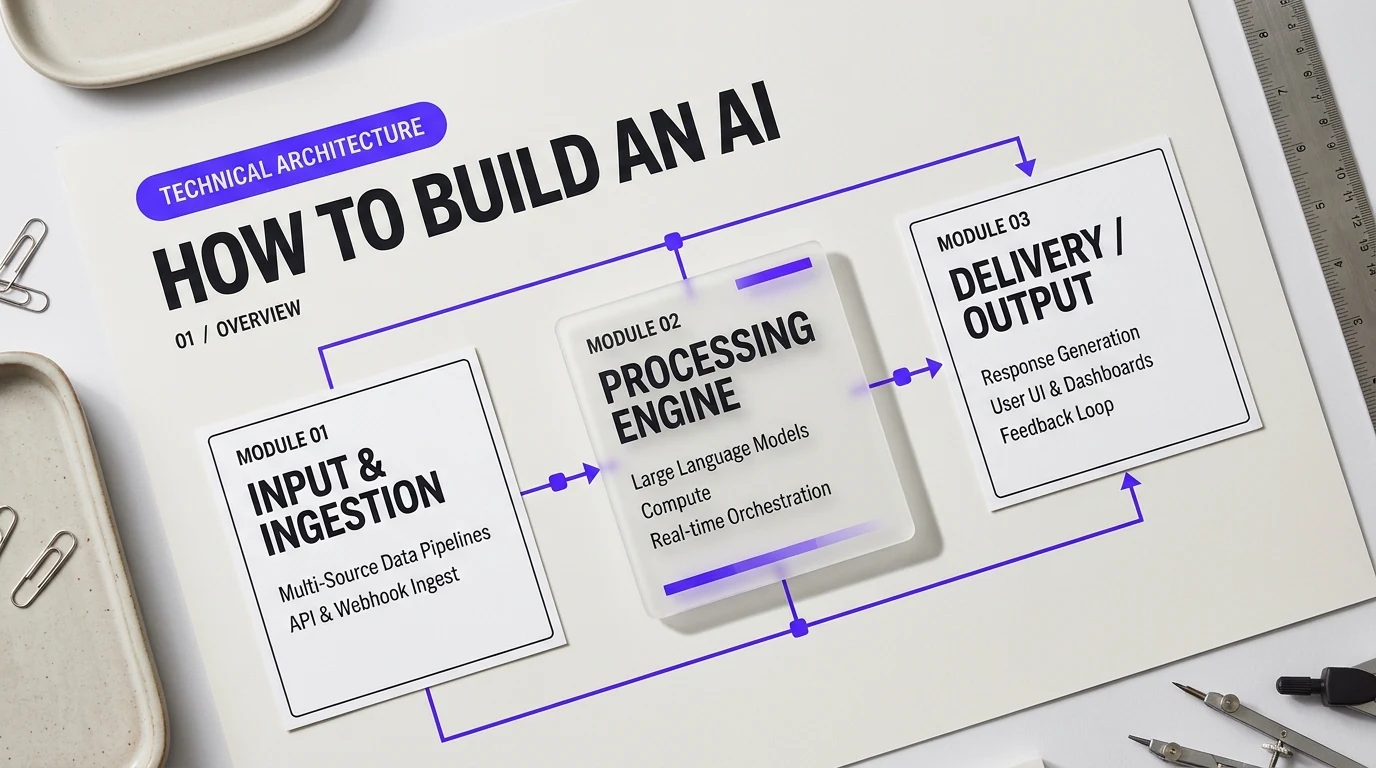
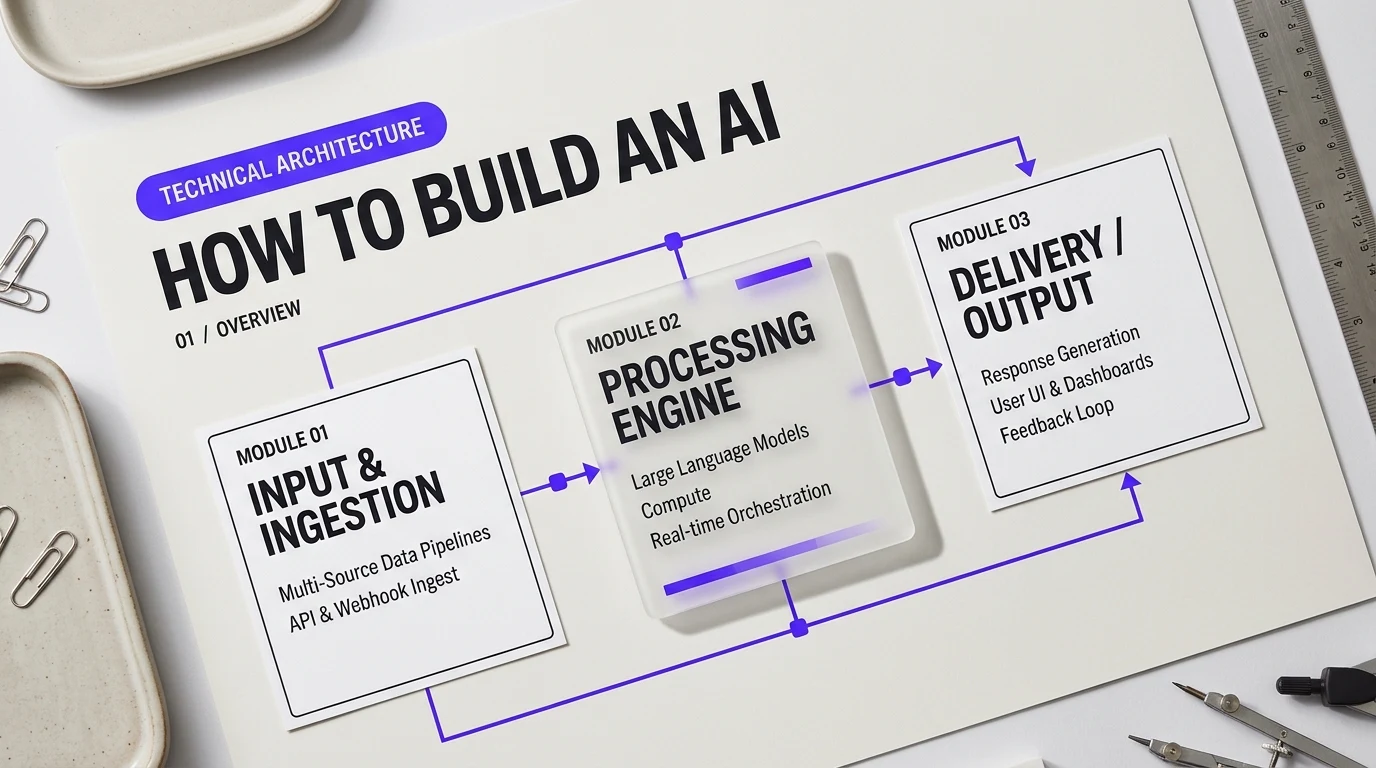
A true retention engine runs on four distinct layers. It ingests data from every touchpoint, builds live customer profiles, predicts what someone needs next, and sends hyper-relevant messages across your channels.
Engineers often get stuck in fragmented setups. As builders noted in data engineering architecture discussions on Reddit, teams frequently find themselves going in circles when pipelines are stitched together haphazardly across detached tools. Post-purchase success requires a unified data canvas.
Architectural Blueprint to Build an AI Post Purchase Retention Engine
Think of this architecture like a smart air traffic control tower. Incoming flights are customer events, the radar system is your ingestion pipeline, and the automated flight dispatchers are your predictive models directing every plane to the right runway.
The video above outlines how to construct structured knowledge architectures. The exact same discipline applies here: raw, unorganized customer signals must transform into clean, contextual assets before your automated retention logic touches them.
1. The Ingestion Layer: Event Streaming and Ticket Feeds
Your engine cannot act on old news. If a shopper receives a damaged item, sending them an automated cross-sell twenty minutes later destroys trust instantly. Your ingestion pipeline needs two main real-time event feeds:
- E-Commerce Platform Webhooks: Captures order creations, cancellations, package deliveries, and refund requests via Shopify, BigCommerce, or custom headless carts using services like RudderStack or Segment.
- Customer Service Stream: Ingests support interactions, tagged tickets, and real-time transcripts from systems like Gorgias or Zendesk.
- Warehouse and Tracking Feeds: Pulls real-time shipment scans from shipping providers to know the exact minute a customer opens their doorstep.
2. The Feature Store and Customer Context Graph
Raw JSON payloads are messy. You need an intermediate layer—often built on tools like Snowflake, BigQuery, or Redis—that stitches these events into an active customer snapshot. According to Rebuy's analysis of AI retention stacks, bridging zero-party preference data with first-party behavioral records is what unlocks real personalization.
This context graph tracks simple, critical fields:
- Days elapsed since last delivery
- Total lifetime value (LTV) band and product affinity group
- Sentiment score from past support conversations
- Estimated product depletion rate
3. The Predictive Intent Modeling Layer
This is the brain of the system. Rather than using an expensive LLM to calculate raw math, combine lightweight machine learning classifiers with specialized generative models. Small machine learning models handle calculations, while language models handle messaging nuances.
| System Component | Recommended Tech Stack | Operational Role |
|---|---|---|
| Event Streaming | RudderStack, Webhooks, Kafka | Collects purchase, fulfillment, and helpdesk pings in real time. |
| Context Storage | PostgreSQL, Redis, Supabase | Maintains an up-to-the-minute profile of customer satisfaction and order history. |
| Predictive Modeling | XGBoost, Scikit-learn, PyTorch | Calculates replenishment dates, churn risks, and next-best-product probabilities. |
| Message Orchestration | Klaviyo, Attentive, Braze, Custom Webhooks | Dispatches targeted emails, SMS updates, and custom account portal banners. |
4. Automated Messaging Orchestration
Once your predictive models calculate a churn risk or determine that a replenishment window has opened, the decision engine sends an instruction payload to your communication channels. If a customer lodged a ticket about a leaking shampoo bottle, the orchestration layer suppresses promotional SMS texts and instead triggers a care flow with tracking information for a replacement.
Every piece works in harmony. Your platform listens, updates customer state, predicts the right response, and takes action without a human having to move data back and forth between screens.
How Automated Customer Support Eliminates Buyer Remorse and WISMO Inquiries
The moment a shopper clicks "Place Order," an invisible clock starts ticking. For a brief second, there is a dopamine hit. Right after that comes the cold chill of buyer's remorse: Did I spend too much? Will it fit? Did I get scammed? If your store goes radio silent until a shipping label prints three days later, that anxiety boils over into support tickets. In ecommerce, "Where Is My Order?" (WISMO) queries often make up half of all incoming support requests. Resolving a single one manually costs an average of twelve dollars, according to Crisp's analysis on automated WISMO handling. That drain quietly erodes customer lifetime value before the box even arrives on their doorstep.
Buying online is like handing cash through a dark drive-through window. If the cashier slides the window shut and disappears into the back for twenty minutes without a word, you immediately worry. You wonder if they took your money or dropped your meal. An intelligent support agent acts like a worker leaning back over the counter with a smile, letting you know your burger is on the grill and will be ready in two minutes.
Why Autonomous Resolution Counts When You Build an AI Post Purchase Retention Engine
When you build an ai post purchase retention engine, your support stack must stop waiting for complaints. Traditional customer service is purely reactive. A customer panics, hunts down your contact page, sends an angry email, and waits twenty-four hours for a human rep to look up a tracking number in a separate carrier portal. That lag burns goodwill and trains buyers never to return.
An autonomous retention engine flips this dynamic. It links your warehouse inventory, order management system, and carrier tracking feeds into a single conversational agent. The AI doesn't just recite tracking links. It anticipates what the shopper needs before panic sets in.
| Customer Touchpoint | Standard Reactive Support | Autonomous AI Retention System |
|---|---|---|
| Carrier Delay | Customer discovers stalled tracking, opens a ticket, demands a refund. | AI spots shipping exceptions early, sends an explanatory text, and offers a store credit perk. |
| Address Typo | Package ships to the wrong home; buyer demands a chargeback. | AI bot verifies addresses instantly in post-checkout chat and modifies the ERP record in real time. |
| Wrong Size Delivered | Multi-day email back-and-forth; customer churns out of frustration. | Self-service portal generates an instant QR code return label and ships the replacement size immediately. |
Let's look at the three primary capabilities that turn support from a cost center into a retention machine.
Predictive Delay Management and Carrier Intelligence
Carriers run into weather issues, sorting hub jams, and mechanical breakdowns every single day. If your customer finds out their package is stuck in a storm before you tell them, you have lost their trust. AI agents monitor raw carrier telematics across services like FedEx, UPS, and national postal systems. When a package misses a scan window or triggers an exception status, the AI flags the delay automatically.
Instead of hiding the bad news, the system triggers proactive outreach: "Hey Sarah, we're watching your package closely. A severe snowstorm in Chicago delayed your delivery by 24 hours, but our team is tracking it every step of the way." This single move cuts inbound ticket surges by up to 80%. It replaces frustration with appreciation because the brand proved it was paying attention.
"Most shoppers don't get angry because a package is late; they get angry because nobody told them it would be late."
Instant Self-Service Exchanges Over Cold Refunds
Returns are usually where brand loyalty goes to die. If returning a product requires printing out a three-page PDF, emailing a photo of the receipt, and waiting two weeks for store credit, that buyer is gone forever. Modern retention setups lean on automated return workflows to save the sale.
Tools like Gorgias AI Agent specialize in deep ecommerce platform integrations, letting customers manage their orders directly inside the chat window without human intervention. Similarly, conversational platforms like Fin AI by Intercom interpret natural language requests and hook into back-office APIs to execute tasks immediately. When a buyer says, "These running shoes are too tight," the AI doesn't just spit out a return policy link. It checks inventory, offers the next half-size up, reserves the replacement pair, and emails a printable return QR code in seconds. By removing friction, you keep revenue inside your business while giving the buyer exactly what they wanted in the first place.
When you build an ai post purchase retention engine with these real-time conversational capabilities, support stops being an operational tax. It transforms into an insurance policy for customer trust, reassuring buyers that choosing your brand was the right decision from checkout to delivery.
Using AI for Dynamic Creative Asset Generation in Post-Purchase Nurturing
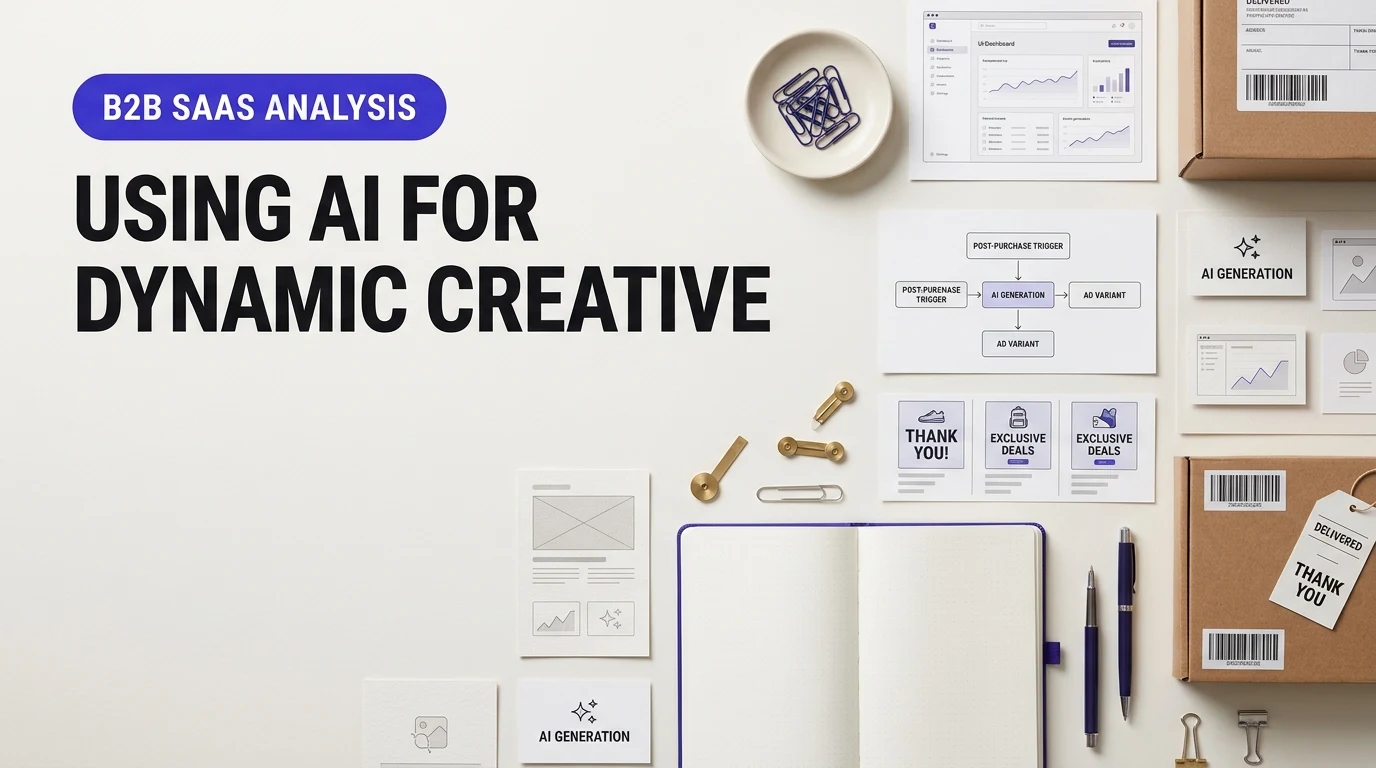
Static confirmation emails are where customer excitement goes to die. A shopper completes a purchase, gets a bland receipt, and waits days in silence. When the box finally lands on their doorstep, they pull out an intimidating, generic paper booklet. If getting started feels confusing or dull, buyers pull back. That initial friction triggers product returns, buyer remorse, and support backlogs.
Generative AI breaks this pattern. Instead of blasting every buyer with the same static manual, forward-thinking brands use real-time purchasing data and browsing context to produce tailored media on the fly. Think of it like a master craftsman writing a personal note directly to your buyer, detailing how their specific items work together.
Creative Workflows to Build an AI Post Purchase Retention Engine
When teams set out to build an ai post purchase retention engine, content creation cannot remain a manual task. Graphic designers simply do not have the bandwidth to design thousands of custom guides every week. Generative pipelines solve this bottleneck by taking order data, feeding it into structured templates, and rendering custom graphics, short videos, and setup steps instantly.
Industry practitioners frequently point out this operational shift. As highlighted in discussions among digital marketing agencies on Reddit, marketing teams rely on AI primarily for creative execution rather than abstract strategy. Over three-quarters of teams using generative models apply them directly to creative production, turning what used to take weeks of design work into an automated background job.
The video above outlines how modern businesses embrace AI tools to speed up asset creation without losing creative control. In post-purchase workflows, this balance is essential. You want programmatic scale, but you need your customer communications to look polished and intentional.
Tailoring Unboxing Guides and Interactive Tutorials
Context determines whether post-purchase outreach feels helpful or spammy. A customer purchasing a high-end espresso machine along with plant-based milk and light-roast coffee beans has very different needs than a buyer ordering basic drip filters.
An intelligent retention system pulls signals from the checkout cart and recent browsing sessions to dynamically assemble onboarding content:
- First-time setup cards: If the customer browsed three troubleshooting articles on oat milk frothing before checking out, the engine creates a custom digital guide: "Dialing In Plant Milks on Your New Steam Wand."
- Modular video stitches: Using dynamic video rendering APIs, the system splices together 10-second setup clips matching the exact attachments ordered.
- Personalized quick-start checklists: The engine formats steps based on the user's reported skill level, bypassing basic explanations for experienced buyers while walking novices through every detail.
| Post-Purchase Element | Legacy Approach | Dynamic AI Generation |
|---|---|---|
| Unboxing Guide | Generic paper sheet inside box | Digital guide tailored to items in cart |
| Product Onboarding | Standard link to YouTube library | Short videos showing user's exact setup |
| Follow-up Recommendations | Random bestsellers list | Context-driven accessories based on browsing |
Context-Aware Recommendations That Prevent Churn
Most post-purchase product recommendations fail because they suggest items the shopper just bought. We have all bought a winter coat only to see ads for that exact coat follow us around the internet for a month.
Retention engines fix this by looking at consumption cycles and technical compatibility. Platforms specializing in customer data pipelines highlight how predictive micro-moments prevent customer drop-off (Rebuy's analysis on subscription personalization). The engine does not push random inventory. Instead, it generates creative units that display the exact maintenance kit, replacement filter, or recipe expansion pack that helps the buyer get more value from their original purchase.
Practitioner Tip: Never let an AI model invent layout designs completely from scratch. Set up locked brand templates with fixed font sizes and color rules. Let the AI generate only the custom text copy, tailored instructional graphics, and recommended item tiles inside those guardrails.
When you align dynamic creative generation with genuine post-purchase education, product returns drop. Shoppers unbox their orders with confidence, master the product faster, and stay primed for their next purchase.
Predictive Replenishment Models: When Should Your Retention Engine Trigger Outreach?
Imagine setting a kitchen timer for thirty days every time someone buys ground coffee from your store. Day thirty dings, and your email marketing tool sends an automated alert: "Running low? Re-order today!"
What if the buyer lives alone and brews one cup on Sundays? They still have half a bag left. Your email is an annoyance that trains them to hit unsubscribe. What if they run a busy studio and blew through the coffee in ten days? You're twenty days too late. They bought replacement beans from a local café two weeks ago.
Static calendar drips treat every customer like an identical machine. They assume everyone drinks, scrubs, swallows, or uses products at the exact same pace. That guesswork leaves serious money on the table.
| Capability | Static Drip Campaigns | Predictive AI Replenishment |
|---|---|---|
| Trigger Mechanic | Hardcoded calendar rules (e.g., 30, 60, 90 days). | Dynamic consumption velocity based on individual habits. |
| Transit Time Awareness | Ignored. Triggers send regardless of fulfillment lag. | Syncs with delivery confirmation dates and regional transit times. |
| Multi-Item Handling | Sends conflicting emails for different items in an order. | Harmonizes replenishment windows into a single unified cart prompt. |
| Conversion Trend | Decays over time as alert fatigue sets in. | Improves as the model learns from repeat purchase cycles. |
Applying Consumption Velocity When You Build an AI Post Purchase Retention Engine
When teams build an ai post purchase retention engine, the primary objective is to replace rigid timelines with probabilistic replenishment curves. Instead of asking "How old is this order?", the system asks "How much product is left in that customer's cabinet right now?"
Every product has a natural burn rate. Think of it like a fuel tank. A 30-serving tub of hydration powder has an assumed burn rate of one scoop per day. Machine learning looks past the text on the label. It examines the real-world repurchase cadence of thousands of past buyers across that specific SKU to establish an empirical consumption velocity.
The model then personalizes that velocity using individual customer signals:
- Order composition: Did they purchase a single 12-ounce bottle or a three-pack bundle? Bundles alter daily usage habits; some people increase usage because supply is abundant, while others are stocking up for six months.
- Household velocity: Multiple shoe sizes or differing skincare lines in a single order indicate a multi-person household, which speeds up cross-catalog depletion.
- Personal historical cadence: If a buyer historically repurchases every 22 days, their personal burn rate overrides the catalog average.
- Real-time digital breadcrumbs: Did the buyer return to your site yesterday to view FAQs or browse complimentary scents? On-site behavior signals that product usage is active and top-of-mind.
In retail lifecycle operations, tracking endless metrics is worthless unless it drives instant execution. On lifecycle discussion boards, retail lifecycle specialist Jamie highlighted this reality, explaining that retention teams stop fussing over complex data pipelines as long as the system reliably triggers the right next action. Your retention architecture needs to turn data points into automated, revenue-generating prompts without manual guesswork.
Calculating the Optimal Window: The 85 Percent Rule
Timing the replenishment alert requires solving a delicate equation. Reach out when the jar is 50% full, and the shopper dismisses the message as premature. Reach out when the jar is completely empty, and you have failed them. They will face four days without the product, driving them straight to a local pharmacy or a next-day marketplace alternative.
The target replenishment window sits at roughly 80% to 85% product depletion. This buffer guarantees that the replacement package arrives on their doorstep before the last drop or pill runs out.
Predictive Outreach Window Formula:
Trigger Date = Delivery Date + (Predicted Days of Supply × 0.85) - (Regional Shipping Duration + Historical Decision Latency)
Notice the final variable: decision latency. First-time buyers rarely click an SMS replenishment alert and check out within sixty seconds. They usually open the message, wait until payday, or ponder the purchase for forty-eight hours. Machine learning models quantify this latency period per cohort. If a shopper routinely takes three days between opening a reminder and finalizing their cart, the system shifts their alert three days earlier.
Off-the-shelf tools like Rebuy's predictive intelligence systems handle this by parsing order intervals and recommending replenishment carts pre-loaded with the exact items running low. High-volume merchants running custom architectures often build predictive replenishment layers directly on top of the Shopify Admin API using Python-based survival analysis models.
Dynamic replenishment changes the customer's relationship with your brand. Instead of feeling sold to by an aggressive marketer watching the calendar, the shopper feels anticipated by a brand that understands their lifestyle.
How Can Sentiment Analysis in Support Interactions Drive Intelligent Upsells?
Every e-commerce merchant fears ghost churn. A shopper orders twice, submits a quick question about sizing, and then disappears forever. As one support lead revealed in Reddit customer success discussions around missed churn warnings, founders often ask why nobody saw an exit coming when previous tickets were marked "resolved." A closed ticket does not equal a happy buyer. Sometimes, it just means they gave up.
Traditional help desks treat tickets as chores to clear off a screen. That mindset costs you repeat sales. When viewed through the right lens, every post-purchase ticket is an unfiltered emotional check-in. Natural language processing (NLP) lets you read between the lines, turning everyday troubleshooting into a launchpad for repeat orders.
Using Sentiment NLP to Build an AI Post Purchase Retention Engine
When you build an ai post purchase retention engine, sentiment analysis bridges the gap between customer service and automated revenue. Think of NLP as an emotional thermometer. It scans incoming customer chats, emails, and review snippets to measure tone, punctuation intensity, and latent frustration. If a customer writes, "Thanks, I guess this will have to work," a basic ticketing system checks the box and closes the thread. An NLP model identifies the lingering dissatisfaction and flags the account.
Modern setups split ticket resolutions into two automated operational tracks:
- The High-Affinity Track: The customer expresses genuine relief or delight. Phrases like "You saved the day," "Fits perfectly," or exclamation-heavy thank-yous trigger high polarity scores. The engine tags this profile in your customer database as primed for an immediate, personalized cross-sell.
- The VIP Rescue Track: Passive-aggressive cues, curt responses, or repeated contacts about the same package push sentiment scores below neutral. The system immediately suppresses promotional marketing emails and pushes the customer into a priority queue for human white-glove intervention.
Field Rule: Never pitch an upsell to a buyer who had to ask twice where their order was. Silence the promo calendar until their emotional balance with your brand returns to positive territory.
How do you implement this in practice? Off-the-shelf tools like Gorgias offer built-in sentiment detection tags that categorize incoming messages into broad intents like "satisfied" or "urgent." They work well for mid-market storefronts that need instant setup without writing custom code. If you run a larger catalog or an omnichannel brand, routing conversation transcripts through custom LLM prompts or fine-tuned RoBERTa models offers far deeper precision. Research cited in Bland AI's benchmark on retention and sentiment indicates that linking real-time sentiment directly to automated workflows can lift customer retention by up to 25%.
Context determines whether an upsell feels thoughtful or tone-deaf. If someone reaches out to exchange a leather bag because the strap arrived scuffed, hitting them with an automated discount for leather cleaner the next morning will infuriate them. The retention engine protects that relationship. It blocks outbound product suggestions, alerts the team to issue a store credit, and waits for a confirmed positive follow-up.
Conversely, catch a buyer at the exact moment an agent successfully walks them through pairing their new smart home device. Their dopamine is high. Relief is palpable. The AI detects this positive peak and quietly drops a tag into your email or SMS platform. Within two hours, the shopper receives a targeted suggestion for an add-on sensor that directly expands the device they just mastered. That is not pushy marketing. It is attentive service that drives immediate lifetime value.
Measuring Success: What Metrics Quantify the Impact of AI Retention Systems?
Demos look neat on paper. Balance sheets tell the real story. Too many e-commerce brands install machine learning models, watch automated emails leave the queue, and call it a day. As founders regularly point out in practitioner discussions on measuring AI agents, algorithms often look dazzling in product demos, but operators struggle to tell whether the tool actually produced fresh revenue, shaved payroll costs, or just claimed credit for sales that were going to happen anyway.
When you build an ai post purchase retention engine, you can't rely on vanity engagement metrics like email open rates or bot conversation counts. You need hard numbers that prove your margins are expanding. Let's look at the primary metrics that tell you if your system is creating real enterprise value.
Scorecard Essentials When You Build an AI Post Purchase Retention Engine
A healthy automated retention system directly targets customer lifetime value while slashing administrative drag. Keep track of four primary indicators to gauge performance across your catalog:
| Key Metric | What It Measures | Legacy Baseline | AI Retention Target |
|---|---|---|---|
| Repeat Purchase Rate (RPR) | Percentage of buyers returning for a second or third order within 90 days. | 15% – 22% | 28% – 40%+ |
| Average Order Frequency (AOF) | Mean turnaround time between initial checkout and subsequent purchases. | 85 – 120 days | 45 – 65 days |
| Support Ticket Deflection | Routine inquiries (like order tracking) resolved without human staff intervention. | 10% – 20% (basic FAQ) | 65% – 80% |
| Payback Period Compression | Number of days required to recoup initial customer acquisition costs (CAC). | 180 – 240 days | Sub-90 days |
Unpacking the Hard Dollar Indicators
Repeat Purchase Rate (RPR) and Purchase Velocity. Tracking total repeat revenue isn't enough; timing is what counts. Think of purchase frequency like a metronome. A basic static email flow hits buyers at generic 30-day marks regardless of product consumption. A predictive retention engine recalculates replenishment timing based on basket size, usage patterns, and user feedback. When your algorithm works, the gap between Order 1 and Order 2 narrows sharply. This speed bump pumps cash flow back into inventory without requiring additional ad spend.
Payback Period Compression. Acquisition expenses are like taking out a short-term mortgage on a customer. The faster that buyer returns to make an unprompted, high-margin purchase, the quicker you wipe out that debt. If your customer acquisition cost is $40 and your initial order contribution margin is $25, you are $15 in the hole. AI-driven cross-sells should be timed precisely to turn that balance positive inside of two billing cycles.
Ticket Deflection Rate. Customer support is often treated as a pure cost center. An autonomous engine changes the equation by intercepting "Where is my order?" (WISMO) tickets and return queries instantly. When resolving tickets, speed matters as much as accuracy. Platforms like Gorgias paired with custom LLM triage layers handle repetitive logistics tasks effortlessly, giving human agents time to focus on complex, high-touch inquiries.
"Most teams can tell you what AI costs, but struggle to outline what it brings back into the cash drawer." — nOps breakdown of AI value metrics
To avoid spending more on computing infrastructure than you make back in repeat gross margin, you must balance raw intelligence with operating costs. Comparing foundation models helps you pick an architecture that doesn't eat your retention margin:
The analysis above contrasts model families like Claude and Gemini on speed, API pricing, and operational execution. Running heavyweight models on lightweight tasks like simple delivery updates quickly inflates your cloud bills. Pick the right tool for the job.
How to Separate Autonomous Lift from Natural Re-orders
How do you know the machine actually caused the conversion? A customer might have bought that refill anyway. You cannot evaluate retention success using last-click attribution alone.
The solution is running continuous holdout testing. Split your post-purchase base into an 85/15 split. The 85% group receives dynamic, AI-timed triggers, personalized unboxing messages, and automated reorder nudges. The 15% control group gets your legacy, static calendar-based notifications. Software like Lifetimely or Triple Whale lets you track cohort LTV curves for both groups side-by-side.
If the AI cohort does not demonstrate a statistically distinct upward lift in 60-day gross margin per customer after accounting for API and software overhead, your retention logic needs recalibration. Keep the model accountable to the bank account, not the tech demo.
Transforming First-Time Buyers into Brand Advocates with Autonomous Retention
Most e-commerce teams treat customer retention like an emergency room. They sit back, wait for a buyer to file a shipping complaint, and scramble to patch the damage with a generic discount code. That approach burns your margin. It also teaches shoppers to view your brand as a commodity. Turning a one-time checkout into a long-term customer relationship requires anticipation, not damage control. When an algorithm spots shipping exceptions before a buyer even checks their inbox, you turn a frustrating delay into an unexpected moment of genuine trust.
Strategic Steps to Build an AI Post Purchase Retention Engine
The operational shift begins when marketing and support stop working in disconnected silos. High-growth operators don't rely on generic surveys that end up in the spam folder. As practitioners observe on Reddit's Voice of Customer forum, building authentic brand loyalty requires elevating key buyers into partners through honest, unscripted feedback loops. An autonomous retention system acts on micro-behaviors across every touchpoint. It tracks how often a customer reviews tracking notifications, how they interact with interactive unboxing guides, and precisely when their supply will run out.
Most direct-to-consumer businesses still run static, time-delayed email cadences through tools like Klaviyo. While time-delayed email automations work well for standard promotions, they struggle to adapt when customer behavior diverges from the average. Combining responsive helpdesk agents with predictive systems like Rebuy Engine's personalization systems lets your store calculate the exact right moment for outreach. If a customer struggles with product setup, the engine delays sales messaging and triggers troubleshooting content instead. The interaction adapts to their situation in real time.
Aligning post-purchase support with automated revenue generation turns what used to be an operational expense into a predictable growth driver. The guide below breaks down how modern operators build autonomous agent workflows to manage customer touchpoints at scale:
When you build an ai post purchase retention engine, you stop playing defense. You replace endless where-is-my-order tickets with tailored product tutorials, predictive delivery alerts, and hyper-relevant replenishment recommendations. The math speaks for itself. Shifting your focus from reactive firefighting to predictive care lowers your acquisition dependency, preserves your margins, and keeps first-time buyers coming back without paid ad nudges.