How to Detect Meta Ad Fatigue with AI
Every growth team knows the sinking feeling when a winning campaign suddenly tanks. Your cost per acquisition creeps up, click-through rates slip, and your budget burns out quickly. When you learn how to detect meta ad fatigue with ai, you stop guessing why winning assets fall off a cliff. Machine learning models track micro-shifts across dynamic catalogs and video variations long before your daily ROAS drops.
Table of Contents
- The Silent ROAS Killer: Why Meta Creative Fatigue Costs E-commerce Brands Thousands
- Core Performance Metrics That Signal Creative Burnout
- Detecting Meta Ad Fatigue with Predictive AI Models
- Evaluating Visual, Copy, and Audio Saturation
- Connecting Ad Saturation to Post-Click Customer Signals
- Automating Creative Refreshes When Triggers Fire
- Building a Fatigue-Resistant Paid Social Engine
Creative fatigue is not just an inconvenience. It is an expensive blind spot. In high-volume e-commerce accounts spending anywhere from $30,000 to $500,000 monthly, creative decay drains thousands of dollars in hidden margins every week. Meta's delivery algorithm operates like a hungry beast. It finds your best-performing ad and pumps the vast majority of your daily budget into it. For a few glorious days, sales roll in. Then the frequency creeps past 2.8. Your audience sees the exact same three-second video hook for the fifth time, and they scroll right past it.
The real damage happens during the lag period. As buyers highlight in Reddit community discussions on creative decay, human media buyers rarely catch ad exhaustion in real time. Most teams rely on blended 7-day trailing metrics inside Ads Manager. By the time you notice your blended ROAS dipped from 3.2 down to 1.8, that specific asset has been burning cash on cold prospects for 72 hours. Multiply that slip across twenty active dynamic product ads and dozens of Reels iterations, and you have missed your monthly revenue target before lunch on a Tuesday.
Manual monitoring cannot keep up with modern paid social velocity. A media buyer reviewing spreadsheets cannot inspect hook retention rates, outbound click trends, and sentiment shifts across hundreds of active ads every hour. The human eye misses early warning signs. You think the ad is fine because impressions remain steady, but Meta is quietly charging you higher CPMs to show that stale ad to a shrinking pool of tolerant users.
Teams running lean operations often compare manual spreadsheet audits against dedicated creative intelligence platforms like Motion or predictive attribution engines like Triple Whale. While dashboards help group data, using algorithms to detect meta ad fatigue with ai solves the actual problem: predictive intervention. Instead of reacting to an ad that died three days ago, intelligent models project the exact slope of creative decay before your margins disappear.
What Core Performance Metrics Signal Creative Burnout Before Conversions Drop?
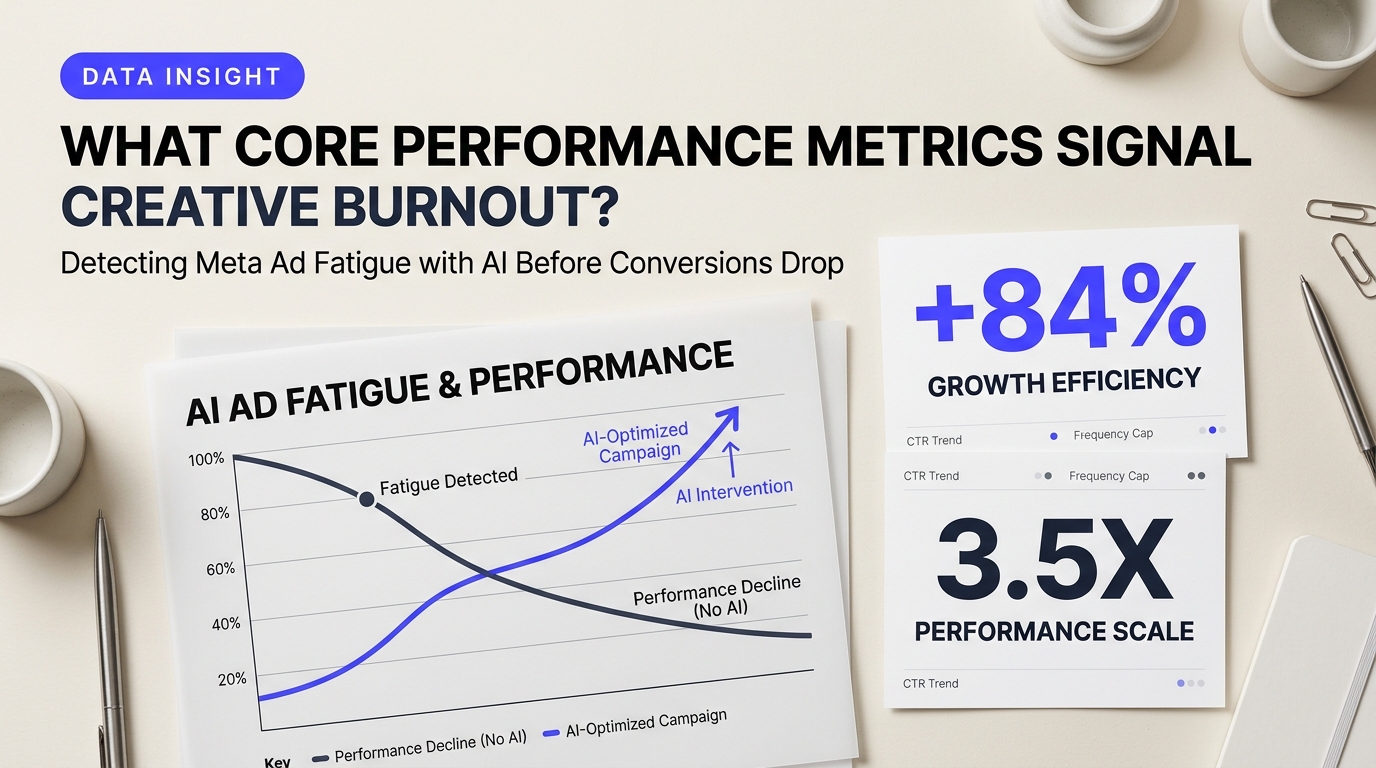
Most media buyers look at Return on Ad Spend (ROAS) and Cost Per Acquisition (CPA) to see if an ad still works. That is a dangerous mistake. ROAS and CPA are lagging indicators. They tell you what already happened yesterday or three days ago, especially when Meta takes up to 72 hours to attribute sales through the Conversions API. When your CPA doubles, you have already wasted thousands of dollars serving stale creative to an exhausted audience.
Creative fatigue does not hit like a lightning strike. It behaves like a slow air leak in a tire. People do not suddenly stop buying all at once. First, they stop looking. Then, they stop clicking. Finally, they stop purchasing. Catching burnout requires tracking leading metrics that reveal ad exhaustion days before your conversion rates collapse.
| Metric | Indicator Type | Early Warning Threshold | What the Drop Tells You |
|---|---|---|---|
| Hook Rate (3s Video Views / Impressions) | Leading | Relative drop of 15%–20% from baseline | Audience recognizes the opening frame and scrolls past. |
| First-Time Impression Ratio (FTIR) | Leading | Dips below 70% in broad prospecting | Meta is repeatedly serving the ad to people who ignored it. |
| Outbound Click-Through Rate (CTR) | Leading | Drops 20% while CPM remains steady | The creative hook or offer angle has lost its persuasive pull. |
| Click-to-Purchase Latency | Leading / Secondary | Time-to-convert increases by 25%+ | Prospective buyers show weaker intent and abandon carts more often. |
| Cost Per Acquisition (CPA) | Lagging | Spikes above target threshold | Damage done; budget has already been wasted on saturated audiences. |
The Frontline Metrics That Signal Creative Burnout
To spot burnout early, you need to watch four specific performance metrics inside Meta Ads Manager and your attribution stack.
1. First-Time Impression Ratio (FTIR) Dips
Think of your audience as a crowded room. The first time you walk in, every face you see is brand new. If you stay in that same corner all night, you end up talking to the exact same people over and over. FTIR measures the percentage of your daily ad impressions delivered to accounts that have never seen that specific ad before. In a healthy prospecting campaign, FTIR stays between 75% and 85%. When your ad creative tires out, Meta's auction engine struggles to win bids among new users. As a result, FTIR drops below 60%. That means Meta is recycling the ad against lukewarm prospects who already skipped it three times.
2. Hook Rate Decay
Hook rate—calculated by dividing three-second video plays by total impressions—is your creative's opening handshake. When an ad launches, strong direct-response video ads typically hold a hook rate above 30%. When hook rate drops to 18% over a four-day window, your audience has memorized the first three seconds. They know it's a pitch, and their muscle memory thumbs straight down the feed.
3. Frequency Ceilings and Frequency Velocity
Raw frequency inside Ads Manager is tricky. A campaign frequency of 2.2 sounds safe on paper. But frequency velocity—the speed at which an ad hits that number—matters far more. If an ad's 7-day rolling frequency leaps from 1.3 to 2.4 in under 72 hours, the ad is burning through its accessible audience segment. Meta has pigeonholed your ad into a tiny sub-pocket of users who are not converting.
4. Elongated Click-to-Purchase Speed
When an ad resonates, it triggers high intent. Shoppers click, view the product page, and checkout within minutes. As fatigue sets in, the traffic quality degrades. Users who click do so with low intent. They browse casually, bounce, or save the item to buy days later. If your median time from click to purchase stretches from four hours to 36 hours, your creative is losing its punch. This secondary signal often surfaces right before a sharp ROAS crash.
"Tracking standard frequency and CPA inside Meta Ads Manager is like checking the weather by looking at yesterday's newspaper. By the time CPA jumps, the campaign is already bleeding cash."
How Teams Detect Meta Ad Fatigue with AI in Real Time
Manual monitoring breaks down as your ad account scales. A growth team running five ad sets with three ads each can track hook rates in a spreadsheet. A direct-to-consumer brand spending $50,000 a month with dozens of active creatives across advantage+ shopping campaigns cannot keep up. Media buyers end up missing early fatigue signals over weekends or holidays.
This pain is common across growing e-commerce teams. As highlighted in marketers discussing ad fatigue pitfalls on Reddit, manual checks lead to delayed pauses and unpredictable budget swings. The delay costs brands thousands before anyone notices the dip.
Modern paid social workflows use predictive algorithms instead of manual checks. When you detect meta ad fatigue with ai, machine learning models continuously monitor the slope of decay across hook rates, FTIR, and outbound CTR. Rather than waiting for a hard frequency ceiling, AI engines calculate rate-of-change regressions. If your hook rate falls faster than your account's typical decay curve while FTIR slips beneath 70%, the system flags the ad as "fatiguing" long before the CPA spikes.
Instead of relying purely on basic automated rules inside Ads Manager—which only support rigid, single-metric conditions like "turn off ad if CPA > $45"—teams deploy multi-metric monitoring. Platforms like Motion handle visual cohort tracking, while Revealbot executes algorithmic adjustments based on blended metrics. Custom machine learning pipelines hook directly into the Meta Marketing API, parsing live impression-level telemetry every hour. These tools calculate multivariate fatigue scores, letting creative teams queue fresh hooks and angle variants before revenue takes a hit.
How to Detect Meta Ad Fatigue with AI Algorithms and Predictive Modeling
Waiting for Meta Ads Manager to show a dive in return on ad spend (ROAS) is like checking your fuel gauge after the engine sputters out. By the time blended cost per acquisition (CPA) spikes across your campaigns, you've already burned three to five days of budget on burnt-out audiences. Modern performance brands don't wait for post-purchase lag. Instead, growth engineering teams learn how to detect meta ad fatigue with ai (Detect Meta) before conversion rates crater.
Ad fatigue doesn't hit overnight. It starts with micro-stumbles. Think of an ad like a marathon runner. Long before a runner collapses from exhaustion, their stride shortens. Their breathing turns shallow. Their pace drops by fractions of a second. Meta's native reporting only shows you when the runner has already hit the floor. Predictive AI models, however, watch the stride.
How Predictive Models Detect Meta Ad Fatigue with AI
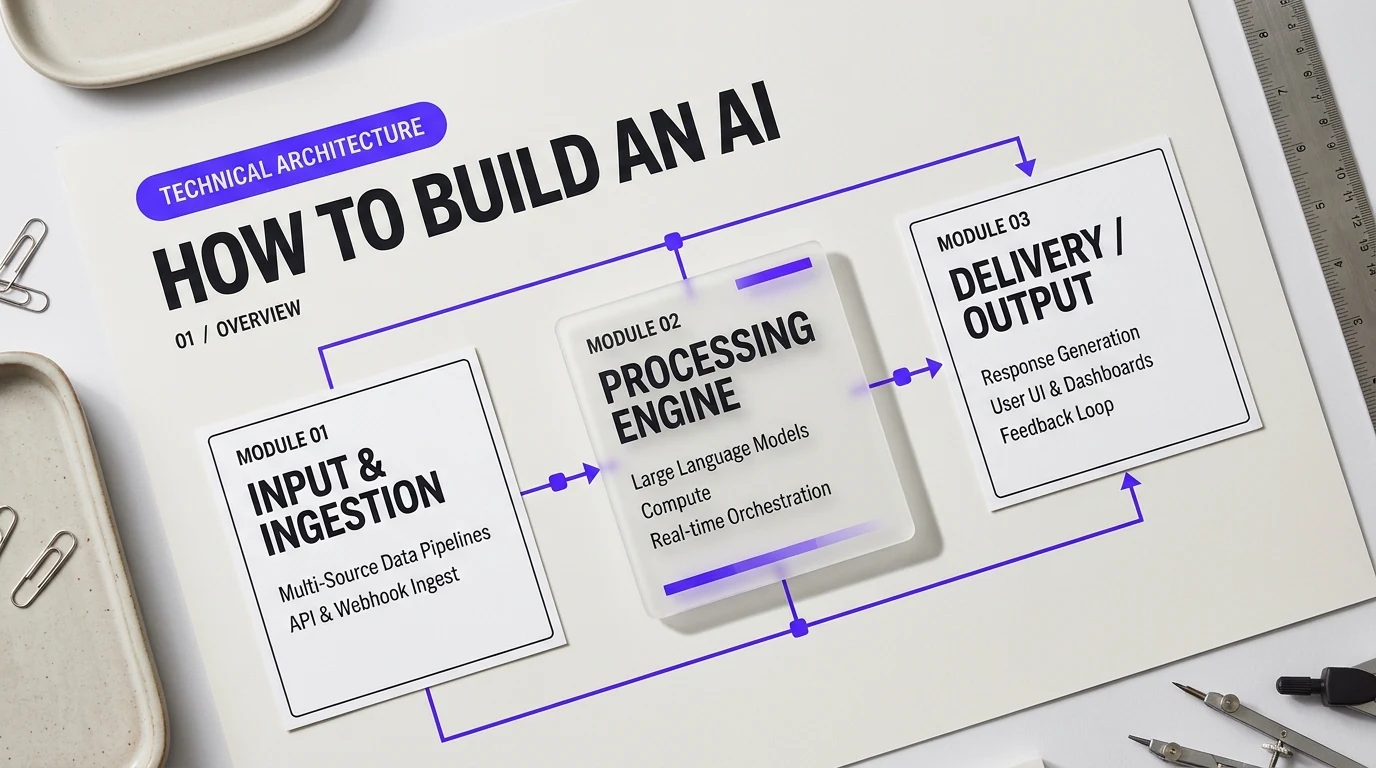
To spot creative burnout ahead of time, machine learning pipelines use time-series forecasting models—such as Meta's open-source Prophet framework or Long Short-Term Memory (LSTM) neural networks. These models ingest hourly performance streams straight from the Meta Marketing API. Rather than looking at isolated snapshot numbers, they process multi-variate time-series data:
- First-Three-Second Hook Retention Velocity: A sudden steepening in the drop-off slope during the opening frames shows creative exhaustion before clicks disappear.
- Outbound Click-Through Rate Decay: The model maps the rolling 72-hour derivative of Outbound CTR against impression volume to flag downward trends.
- Audience Overlap Saturation: Tracking how quickly unique reach stalls relative to overall impressions exposes audience pooling.
- Dynamic Cost Per Mille (CPM) Acceleration: The algorithm flags rising auction bids caused by Meta's algorithm penalizing dropping expected user engagement scores.
When you detect meta ad fatigue with ai systems, your models don't just wait for an ad to cross a rigid, static rule. Static rules are blunt instruments. If you tell Ads Manager to shut off an ad once frequency hits 3.0, you might kill a winning video that converts easily at a 4.5 frequency. Or you might let a weak image ad waste hundreds of dollars at a 1.8 frequency because its messaging grew stale in forty-eight hours.
Predictive architectures eliminate this guesswork by generating rolling confidence bands. The algorithm calculates an expected performance baseline for every ad based on its vertical, creative format, target audience size, and historical decay velocity. When an ad's live performance breaks through the lower bound of that confidence band for twelve consecutive hours, the system triggers an early warning alert.
| Monitoring Approach | Trigger Mechanism | Average Reaction Lag | Risk of False Positives |
|---|---|---|---|
| Manual Dashboard Audits | Media buyer notices CPA spike in Ads Manager | 48 to 96 hours | High (blames creative for temporary platform attribution delays) |
| Native Meta Rules | Static rule thresholds (e.g., Frequency > 3.0, Cost per Result > $45) | 24 to 48 hours | Moderate (fails to adjust for weekend peaks or audience size shifts) |
| AI Predictive Modeling | Dynamic 2-sigma decay in engagement velocity against moving medians | 4 to 12 hours | Low (benchmarked against continuous baseline trendlines) |
A common debate among media buyers revolves around whether building or buying predictive detection makes financial sense. As store owners note in community threads about evaluating ad fatigue alternatives for smaller teams, early-stage brands spending under $10,000 a month rarely need custom neural architectures. At lower spend levels, automated webhook scripts using Google Sheets and basic regression calculations can catch decaying engagement trends without overhead.
Once ad spend climbs past $50,000 monthly, custom scripts or specialized SaaS engines like Revealbot and Madgicx quickly pay for themselves. Tools in this tier range anywhere from $200 to over $1,500 per month. The return comes from salvage value: an AI tracking system flags fatigue when an ad is still profitable, giving your creative team a three-day head start to film fresh hooks or spin out iterations before the primary asset bleeds ad spend.
"The real win isn't just turning off a bad ad automatically," explains one performance marketing lead on Quora. "The win is knowing on Tuesday afternoon that your primary prospecting creative will exhaust its target audience by Friday morning. That gives our video editors seventy-two hours to supply iterations before our account CPA suffers."
Setting up predictive thresholds protects your team from knee-jerk decisions. If an ad's CTR drops for three hours during an off-peak weekday morning, a crude automated rule might pause it prematurely. A predictive model checks that dip against historical Tuesday morning trends, recognizes it as normal audience behavior, and keeps the campaign running. You stop guessing, you stop overreacting to noisy hourly spikes, and you keep your creative spend working at peak efficiency.
Evaluating Multi-Modal Creative Decay: How AI Reads Visual, Copy, and Audio Saturation
Ads rarely die all at once. Usually, one specific component rots while the rest of the asset still has life. An opening three-second visual hook might burn out across your broad targeting, even though your offer copy and closing call-to-action remain wildly effective. When growth teams detect meta ad fatigue with ai at a multi-modal level, the software doesn't just watch blended ROAS slip. It isolates your creative assets into three distinct layers—pixels, audio waveforms, and text strings—to pinpoint exactly what audience segments are tired of seeing.
Deconstructing Creative Signals to Detect Meta Ad Fatigue with AI
Human buyers don't experience an ad as a single data point. They see a face, hear a voice, and skim a headline simultaneously. Multi-modal AI evaluates these inputs using specialized neural networks running in parallel.
Computer vision acts like an automated storyboard analyst. It slices every video into frame sequences, measuring visual velocity, face presence, lighting temperature, and on-screen text placement. If your top five spending ads all open with a creator tapping their phone screen against a kitchen counter, computer vision tags that visual hook cluster. The model tracks user thumb-stop rates against that visual fingerprint. When users start swiping past that opening frame faster than usual, the system flags the hook as decayed—even if the overall video still posts an acceptable conversion rate on low spend.
Natural Language Processing (NLP) handles the copy and scripts. The AI parses the primary ad copy, headline variations, dynamic product overlays, and automatic audio transcriptions. Instead of just matching keywords, modern language models classify the psychological angle. They separate a fear-of-missing-out angle from a founder-origin angle or a direct problem-solution breakdown.
Audio models complete the picture. They extract acoustic features, voiceover tone, background track tempo, and cadence. You might think you launched ten totally unique video ads this month. If all ten run the same upbeat ukulele track and the same fast-paced voiceover cadence, your audience will tune them out as identical noise within days.
| Creative Layer | Extraction Method | Granular Decay Trigger |
|---|---|---|
| Visual Hook | Computer Vision (Frame-by-frame vector mapping) | Thumb-stop rate drops >18% over a rolling 48-hour window on broad audiences. |
| Audio & Voiceover | Spectrogram analysis and automatic transcription | Average watch time collapses specifically at sound-on playback moments. |
| Promotional Angle | NLP angle categorization and sentiment mapping | Click-through rate (CTR) degrades across lookalikes while remaining stable on cold broad. |
Mapping Angle Exhaustion Across Broad and Lookalike Audiences
Creative decay behaves differently depending on the audience architecture Meta's algorithm is mining. Broad targeting relies on the creative itself to find the target audience. In a broad campaign, visual hooks burn out fast. Millions of cold users scroll past the first two seconds, forcing Meta to bid more aggressively to find fresh impressions.
Lookalike and warm custom audiences hit a different bottleneck. These segments usually tolerate familiar visuals because they already know your brand or category. What burns out here is the promotional angle. If you run a "15% off first order" message across lookalikes for three consecutive weeks, conversion rates crater even if your hook-to-watch ratio stays steady. The audience hasn't tuned out the visual style. They've tuned out the pitch.
Multi-modal AI eliminates the guesswork of swapping entire videos. If the data shows the audio hook has burned out on broad audiences while the mid-video product demo still sells, your editing team only needs to swap the first three seconds and the voiceover file.
Performance teams often debate whether granular tracking pays off. As seen in marketers discussing automated creative tagging vs manual review, building spreadsheets to hand-tag every visual cue takes hours that small media buying teams just don't have. Automated tools like VidMob or creative intelligence platforms like Motion remove that manual bottleneck. They plug directly into Meta Ads Manager, pulling metadata, tagging video frames, and correlating specific creative layers with rising Cost Per Acquisition (CPA).
Watch out for false alarms during the learning phase. Algorithmic decay detection requires a clean baseline. If you run a high-budget flash sale or tinker with bidding strategies, short-term performance dips can mimic asset decay. Multi-modal AI protects you from premature refreshes by checking whether performance dropped across the entire asset cluster or solely around one over-saturated visual hook.
Connecting Ad Saturation with Post-Click Experience and Customer Support Signals
Ad fatigue doesn't stay trapped inside Meta Ads Manager. When an audience sees the same visual hook for the twelfth time, their behavior changes. They stop clicking out of genuine excitement. Instead, they click out of confusion, annoyance, or mild skepticism. That friction carries straight over to your storefront.
Most growth leads only watch top-of-funnel signals like rising cost per mille (CPM) or falling click-through rates. By the time those numbers flash red, you've already wasted thousands of dollars serving stale creative. The earlier warning signs appear downstream in your customer service inbox and live chat logs.
Using Customer Sentiment to Detect Meta Ad Fatigue with AI
When an ad angle wears thin, media buyers often tweak headlines to squeeze out extra clicks. They make bolder promises. They use flashier hooks. Sometimes, they let seasonal promo creative run long after a campaign ends. This creates an expectation gap between the ad and the landing page.
Think of it like a restaurant sign promising a free dessert. If guests walk in and learn the offer expired last week, they won't blame the chef. They blame the host. On your website, your support widget takes that hit.
Modern natural language processing (NLP) models can read incoming tickets and chat sessions in real time. Instead of waiting for weekly sales reports, you can detect meta ad fatigue with ai by tracking spikes in customer confusion. An AI tool monitors keyword clusters, sentiment drops, and repeated complaints linked to specific UTM parameters.
| Creative Decay Phase | Meta Ads Manager Signal | Post-Click Support & Chat Signal |
|---|---|---|
| Early Wear-Out | Frequency creeps above 2.4; outbound CTR dips 10-15%. | Chatbots log repeat questions about basic product specs already shown in newer ads. |
| Misaligned Desperation | CTR spikes briefly from aggressive hooks, but bounce rates rise. | Support inbox sees discount code failures, shipping cost gripes, and "Where is this bundle?" queries. |
| Terminal Burnout | ROAS drops 40%+; CPA doubles; negative ad comments spike. | Pre-sale chat sentiment scores go negative; return requests cite "product looked different in video." |
Store founders frequently debate whether tracking these conversational signals beats relying on native ad dashboards. In community forums discussing post-click customer support signals, operators point out that manual reviews fail during high-volume pushes. Support agents simply resolve the ticket and move on. They rarely report back to the media buying team that an ad creative is driving bad-fit traffic.
Connecting the Feedback Loop: Helpdesk to Ad Account
How do you close this loop without adding hours of manual triage? You connect your support stack directly to your creative analytics.
Dedicated e-commerce helpdesks like Gorgias or Zendesk use automated rule engines to tag customer intent. When you pair these platforms with AI-driven sentiment analysis, patterns emerge rapidly:
- Discount Disconnects: The AI flags multiple users asking why a featured "Buy One, Get One" banner didn't apply at checkout. This tells you a saturated campaign is still serving an old promotion.
- Feature Confusion: Shoppers repeatedly ask your live chat if a jacket is waterproof. Your current winning video highlights styling, but your audience has grown numb to the look and wants technical details.
- Unfulfilled Expectations: Returns spike with the tag "Not as described." An AI model maps these refunds back to a specific video ad variant that used deceptive angles or heavy filters.
"When your cost per acquisition jumps, don't just look at creative thumbstop rates. Look at what first-time visitors type into your search bar and chat box three minutes after landing."
Platforms like Octane AI or custom language models reading your Shopify chat logs can group user objections by landing page URL. If visitors arriving from Ad Set A show 30% higher pre-sale hesitation than those from Ad Set B, Ad Set A is burning out. The creative is pulling in unmotivated, confused buyers.
Catching these signals early protects your margins. You won't burn ad spend driving traffic that lands disappointed and leaves frustrated. When you detect meta ad fatigue with ai across both your front-end metrics and downstream chat channels, you get the complete picture. You fix the messaging before the customer gives up on your brand entirely.
How to Automate Creative Refreshes and Asset Generation When Fatigue Triggers Fire
When an ad stops converting, speed is everything. In traditional setups, media buyers spot creative burnout on Tuesday, brief designers on Wednesday, and get fresh assets by the following Monday. By then, performance has flatlined, blended acquisition costs have jumped, and Meta's delivery algorithm has penalized your ad account. Closing this gap requires turning ad fatigue detection into an active launchpad for production.
Using Automated Triggers to Detect Meta Ad Fatigue with AI and Spawn Fresh Creatives
When you detect meta ad fatigue with ai monitoring systems, the goal isn't just to turn off an ad. The real payoff comes from setting up a live relay. Think of it like a smoke alarm wired straight to a sprinkler system. The moment a critical signal flashes—such as a 30% drop in your three-second hook rate over a rolling 72-hour window—an automated webhook fires off to your creative production pipeline.
This automated bridge works across three core creative layers:
- Opening Hooks: The body of your video ad usually converts well; it's the first three seconds that tire out. An LLM takes your top-performing script, pulls your core value props, and writes five new visual hook scripts and text overlays targeting different emotional triggers.
- Visual Scenery and Product Context: Computer vision isolates your core product layer, while generative image models (like Flux or Midjourney via API) swap out fatigued studio backgrounds for localized lifestyle environments, seasonal themes, or native user-generated aesthetics.
- Body Copy and Primary Text: AI re-angles your customer reviews and benefits into alternate messaging frameworks—shifting from problem-solution angles to social proof or risk-reversal hooks.
"The biggest mistake teams make when automating asset generation isn't the AI tools themselves—it's trying to invent brand new concepts from scratch. AI thrives at iterating winning angles, not inventing cultural lightning in a bottle."
Comparing Automated Iteration Workflows: Dedicated Platforms vs. Modular Stacks
Growing e-commerce brands usually pick between two approaches for replacing burnt-out assets. Your choice depends on internal technical bandwidth, creative volume, and budget.
| Workflow Path | Core Tech Stack | Rendering Speed | Best For |
|---|---|---|---|
| All-in-One Creative Platforms | Pencil, Marpipe, or Creatopy | 5 to 15 minutes per batch | Lean growth teams wanting out-of-the-box templates, automated batching, and direct Meta Ads Manager sync without writing code. |
| Modular API Pipeline | Make / Zapier + OpenAI API + Creatomate / Bannerbear | Under 60 seconds per asset | Scaling brands spending over $50k/month wanting custom brand constraints, dynamic video stitch engines, and custom naming conventions. |
Pencil works well for brands that need fast, template-driven iteration across social formats without managing custom code. In contrast, building a modular pipeline using Make, Creatomate, and an LLM gives you granular control over typography, aspect ratios, and voice guardrails. For teams debating the setup investment, community members frequently share candid feedback in marketing discussions on automated creative pitfalls, noting that visual consistency requires strict input templates.
Building the "Human-in-the-Loop" Quality Check
Should you let an automated script publish AI-generated creatives straight into your live Meta campaigns? In almost all cases, the answer is no. Unchecked automated publishing introduces distinct hazards: warped text on product labels, bizarre generative artifacts, and Meta policy flags that can put your account in bad standing.
A resilient workflow uses a rapid approval gate:
- Your fatigue detection rule detects performance decay on Ad A and triggers the asset generation webhook.
- The creative engine generates three new video hook cuts and two fresh static variations within five minutes.
- The engine drafts these variations inside Meta Ads Manager as inactive ads or dumps them into a dedicated Slack channel with interactive buttons: [Approve & Launch] or [Reject].
- A creative strategist or media buyer taps "Approve" directly from mobile or desktop.
- The ad publishes directly into your testing ad set, preserving conversion history while swapping out tired visuals.
This hybrid loop keeps your campaign fresh without forcing human designers to spend hours building minor aspect ratio tweaks or visual crops. You protect ad spend from creative burnout while keeping human oversight firmly on brand safety.
Scaling Predictable Ad Spend: Building a Fatigue-Resistant Paid Social Workflow
Most paid social teams run their accounts like firefighters. They wake up, check Ads Manager over morning coffee, and watch performance metrics tank. Cost per acquisition spikes. Hook rates plummet. Click-through rates crater. By the time someone identifies the problem, the account has burned through thousands of dollars on dead creative. The creative team scrambles to push out new variations, starting the panic all over again.
You cannot scale ad spend on guesswork and panic. When you train your systems to detect meta ad fatigue with ai, you trade reactionary fire drills for predictable, baseline-protected growth. You stop waiting for ROAS to drop off a cliff before taking action.
Operational Playbook: Detect Meta Ad Fatigue with AI in Real Time
Moving from manual campaign oversight to a self-healing creative engine requires rewiring how your creative and media-buying teams collaborate. Think of it like swapping a manual thermometer for a smart thermostat. Instead of checking whether the room is boiling after the damage is done, the system senses subtle shifts and regulates itself.
Build your fatigue-resistant workflow around four core shifts:
- Unify creative metadata with performance metrics: Stop tracking static metrics in isolation. Feed your ad account visual, textual, and acoustic tags from the jump. Tag each asset with hook angles, lighting conditions, voiceover tones, and visual pacing so machine learning models can surface exact saturation patterns across formats.
- Implement tiered warning systems: Creative decay reveals itself in secondary metrics first. Configure automated alert thresholds when three-second video view rates slip by 15% or outbound click-through rates degrade over a 72-hour window. This flags worn-out concepts days before downstream conversion costs explode.
- Build a modular asset warehouse: Never deliver monolithic videos. Instead, slice your top-performing concepts into swappable components: three distinct hooks, two bodies, and two calls to action. When an early-warning signal trips, an automated pipeline can stitch fresh permutations without booking new shoots.
- Set strict automation boundaries: Software should alert and allocate, but human judgment should validate context. Many marketers highlighting automation pitfalls and edge cases on Reddit note that unmonitored scripts often throttle high-value scaling ads during temporary platform blips. Set floor budgets and confirmation windows so algorithms don't kill winning creative during weekend reporting lags.
Manual media buying checks the rearview mirror. AI creative intelligence looks through the windshield.
Choosing the right stack depends on your monthly volume. Mid-market brands spending under $30,000 monthly usually get the highest return combining creative diagnostics tools like Motion—which maps hook rates and hold times visually—with native automated rules inside Meta. Enterprise accounts spending seven figures benefit from dedicated multi-modal intelligence engines paired with automated execution platforms like Revealbot. These engines ingest catalog performance, ad variations, and audience frequency to shift budgets automatically.
Creative exhaustion is no longer an unpredictable creative problem. It's an operational bottleneck. Modern algorithms prioritize visual variety above micro-targeted audience splits. The brands dominating your feed tomorrow aren't just outspending the competition. They've built agile production loops that continuously learn, flag decay, and refresh assets before performance drops.
Audit your creative library this week. Establish early degradation signals. When you systematically detect meta ad fatigue with ai, your ad spend stops surviving on luck and finally becomes an engine for predictable scale.